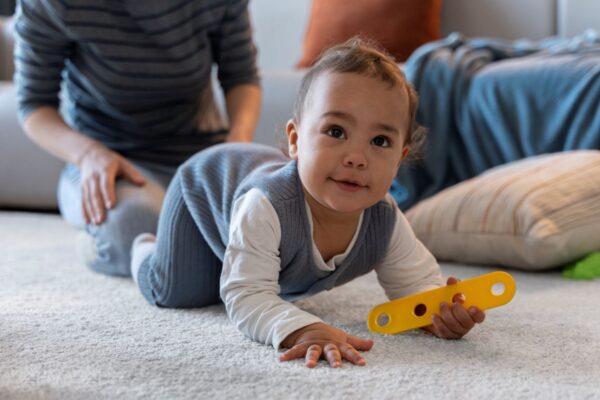
Many families consider crawling a secondary motor milestone. However, when a baby presents with an asymmetric crawling pattern, it is not a matter of “preference” or a mere curiosity, but...
read more → A clinical, close, and preventive perspective to protect language and neurodevelopment from the very beginning. Why look beyond newborn screening? Newborn hearing screening is a great start, but it’s only...
read more → You’ve probably heard that it is the longest nerve in the body, named vagus—not because it’s lazy, but because it wanders through the body like a vagabond. It is part...
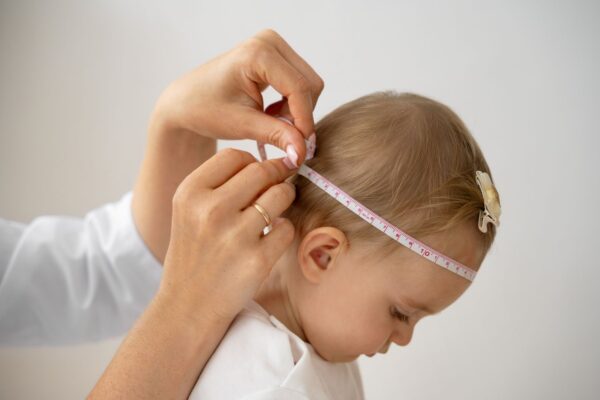
read more → In consultation, many families come worried about the shape of their baby’s head: “One side is flattening,”“It looks like one ear is more forward,”“It’s hard for him to turn to...
read more → An integrative look at the origins of dyslexia “He doesn’t understand what he reads.”“She struggles so much with writing.”“He confuses letters… but he’s very intelligent.” Dyslexia shows up in the...
read more → When babywearing and movement are not enough: the importance of an integrative evaluation and a well-designed vestibular intervention. We’ve been babywearing since birth. “We’ve done swimming since 4 months old.”...
read more →
That feeling that “something doesn’t fit”...
As professionals in child development, we’ve all experienced that moment.
The baby seems healthy. Neurological tests are within expectations. But something...
read more →
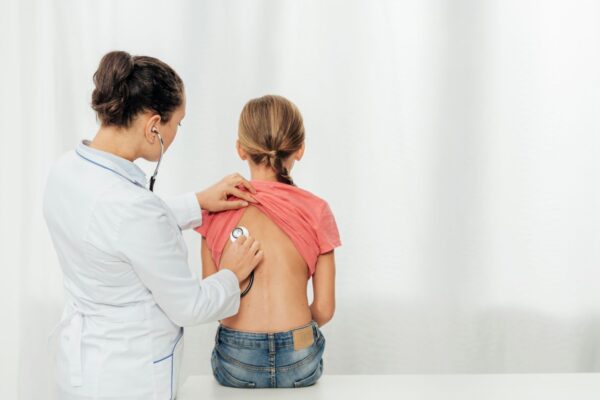
When we look at scoliosis, our attention usually focuses on structure: the Cobb angle, vertebral rotation, muscle balance…But what if the origin wasn’t purely structural? What if the problem...
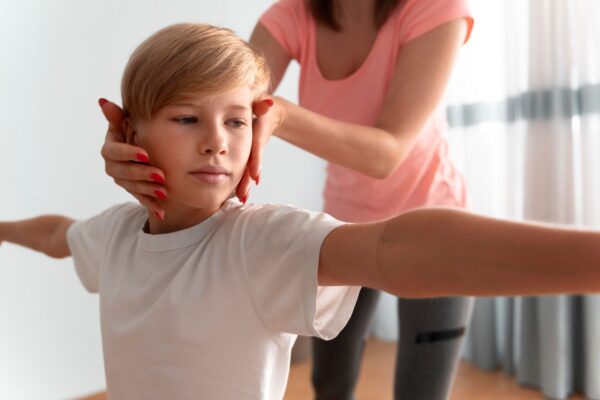
read more → There are children who never stay still. Children who jump, run, spin… all day long. And still, they don’t regulate. They don’t learn better. They don’t connect more. Because not all...
read more →
In clinical settings, it is common to hear phrases like “my child trips a lot” or “he’s very clumsy in sports, especially when running, climbing, or riding a bike.”...
read more →« Previous Page — Next Page »