While excessive time spent on the back is the most common cause of positional plagiocephaly, there are other crucial factors that require professional attention—especially neck-related issues. 1. Recognizing a Forced... read more →
Positional plagiocephaly—the flattening of a baby’s head due to constant pressure—is a problem that, ideally, shouldn’t exist because it’s incredibly easy to prevent. The key to avoiding this deformation is... read more →
In the field of pediatric respiratory physiotherapy, most consultations begin with a very concrete concern: persistent mucus, respiratory noises, coughing, feeding difficulties, or repeated episodes of infection. However, behind these... read more →
In the field of pediatric physiotherapy and orofacial care, it is increasingly clear that breastfeeding requires a broader perspective than the one commonly used. It’s not just about observing the... read more →
A reflection on training, evidence, and clinical practice Within pediatric physiotherapy there is a topic as interesting as it is controversial: the role of manual therapy in babies and children.... read more →
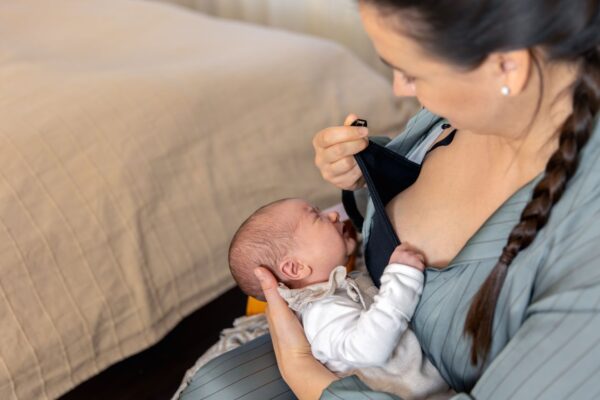
Breastfeeding is much more than nutrition: it is contact, bonding, and movement. More and more studies show that a baby’s motor and postural development is deeply connected to their ability... read more →
During the First Congress of Pediatric and Neonatal Kinesiology at the Garrahan Hospital, pediatric physiotherapist Davinia Cobos Montoya gave an inspiring presentation on a very valuable tool to support babies... read more →
A study published in Infant Behavior and Development (Little et al., 2019) confirms something that many pediatric physiotherapists already perceive in their daily practice: constant physical contact between mother and... read more →
Many pediatric physiotherapists feel frustrated: after improving neck rotation in babies with congenital muscular torticollis (CMT), the head tilt persists. That residual inclination generates doubts, insecurity, and the feeling that... read more →
Utilizamos cookies propias y de terceros para optimizar tu navegación, adaptarnos a tus preferencias y realizar labores analíticas. Si continuas navegando consideramos que aceptas nuestra Política de Cookies.
Privacy & Cookies Policy
Privacy Overview
This website uses cookies to improve your experience while you navigate through the website. Out of these, the cookies that are categorized as necessary are stored on your browser as they are essential for the working of basic functionalities of the website. We also use third-party cookies that help us analyze and understand how you use this website. These cookies will be stored in your browser only with your consent. You also have the option to opt-out of these cookies. But opting out of some of these cookies may affect your browsing experience.
Necessary cookies are absolutely essential for the website to function properly. This category only includes cookies that ensures basic functionalities and security features of the website. These cookies do not store any personal information.
Any cookies that may not be particularly necessary for the website to function and is used specifically to collect user personal data via analytics, ads, other embedded contents are termed as non-necessary cookies. It is mandatory to procure user consent prior to running these cookies on your website.