


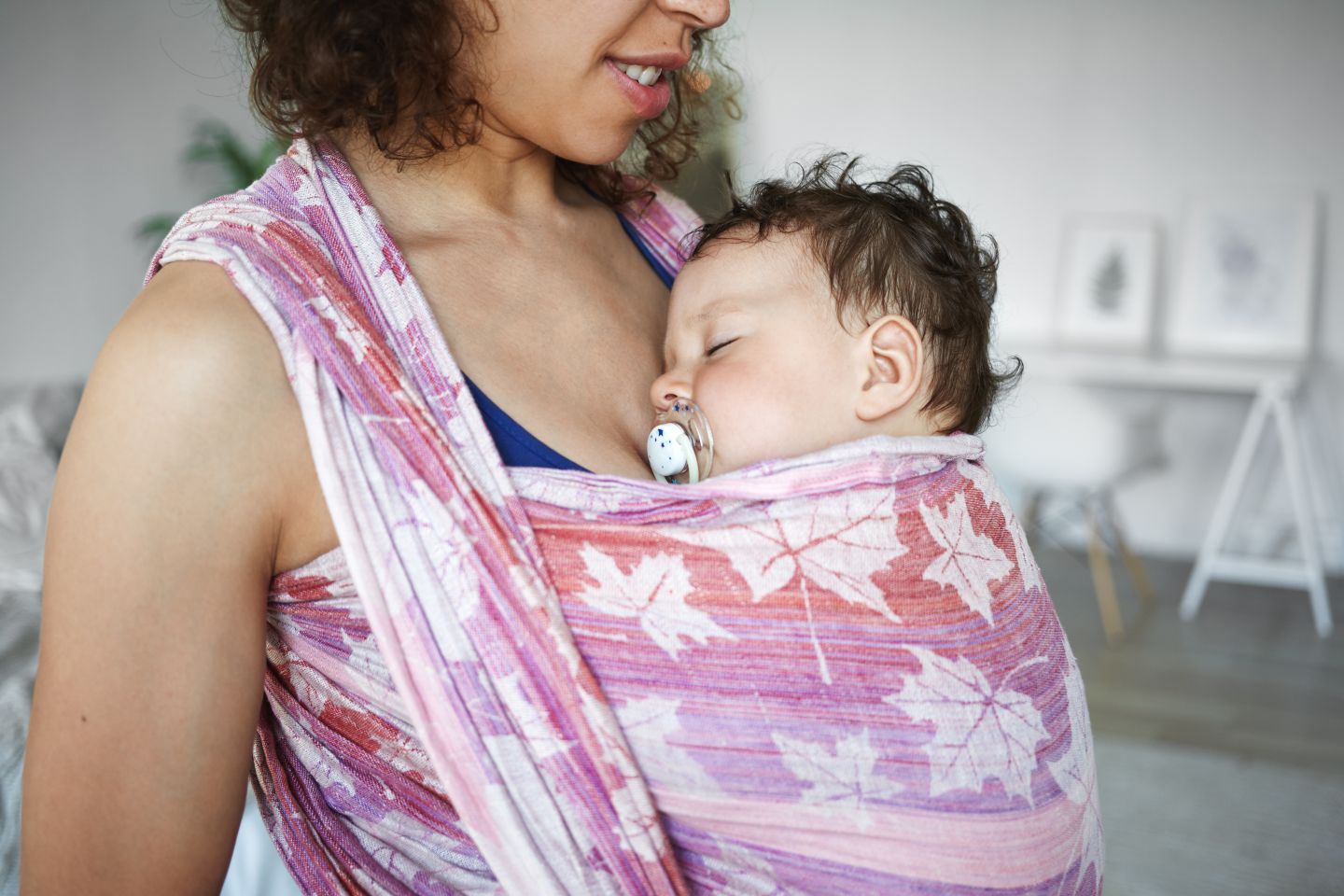
A study published in Infant Behavior and Development (Little et al., 2019) confirms something that many pediatric physiotherapists already perceive in their daily practice: constant physical contact between mother and baby enhances communication, attunement, and maternal sensitivity.
🔍 What the Research Found
Through three complementary studies, the authors analyzed how babywearing influences the way mothers respond to their babies’ cues:
- Study 1: Mothers who practiced babywearing responded more quickly and in a more coherent and attuned way to their babies’ emotions.
- Study 2: These mothers shared values associated with proximal care: prioritizing closeness, responding promptly to crying, and maintaining continuous physical contact.
- Study 3: When comparing moments with and without contact, it was observed that babywearing increased tactile interactions, reduced the use of objects as mediators, and improved vocal responses to the baby’s vocalizations.
🧠 What This Contributes to Pediatric Physiotherapy
Prolonged physical contact not only strengthens the bond, but also transforms the way mother and baby communicate — something essential for motor, sensory, and emotional development from the earliest months.
👉 Some Clinical Applications:
- Recommending ergonomic babywearing as a therapeutic and preventive resource for babies with tone alterations or self-regulation difficulties.
- Incorporating contact and meaningful touch into sessions: skin-to-skin, massage, or conscious handling.
- Guiding families to understand how bodily closeness and attuned responses to the baby’s cues promote well-being.
- Using babywearing as a natural context to stimulate head control, postural alignment, and sensory integration.
- Observing the baby’s signals during babywearing — movements, vocalizations, tone, or gaze — to strengthen nonverbal communication.
💬 In Summary
Babywearing is not just a practical way to carry a baby — it is a relational experience that strengthens bonding, regulates emotions, and synchronizes bodies.
Scientific evidence confirms it — and pediatric physiotherapy holds in its hands a powerful tool to support development through contact and closeness.
Comments are closed.