


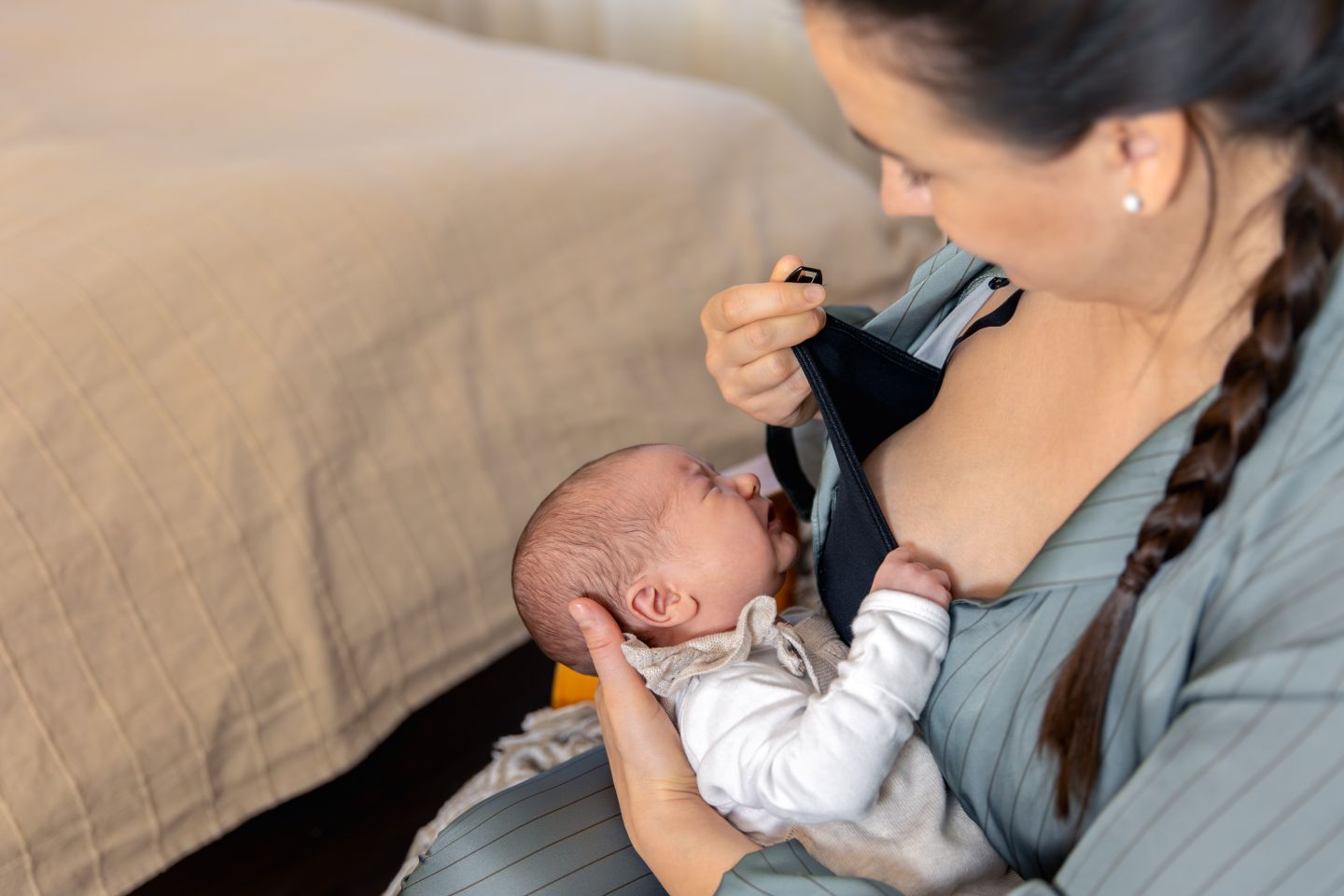
During the First Congress of Pediatric and Neonatal Kinesiology at the Garrahan Hospital, pediatric physiotherapist Davinia Cobos Montoya gave an inspiring presentation on a very valuable tool to support babies in their first days of life: the orofacial neurosensorimotor intervention.
It may sound complex, but its goal is simple and fundamental: to help babies feed and breastfeed better.
🍼 Breastfeeding: much more than feeding
The specialist explained that breastfeeding is not only a way to nourish, but also an act that strengthens the bond, protects health, and stimulates the baby’s development.
Studies show that breastfed babies have fewer infections, regulate their temperature and breathing better, and develop their face, mouth, and entire motor system in a more balanced way.
Moreover, seeing a baby who can suck and coordinate movements properly gives us clues about their neurological maturity.
That’s why promoting breastfeeding also means caring for the brain and nervous system from the very beginning.
👶 What is orofacial neurosensorimotor intervention?
It consists of a set of small stimulations and exercises that help the baby to better organize the movements of the oral cavity, tongue, and face.
Through tactile contact, smell, and non-nutritive sucking, natural reflexes such as rooting and sucking are awakened.
All of this helps the baby coordinate sucking, swallowing, and breathing, which are essential steps to achieve oral feeding and, ultimately, successful breastfeeding.
🤲 A teamwork effort between professionals and families
This type of intervention is usually carried out by physiotherapists, speech therapists/logopedists, or occupational therapists specialized in neonatal orofacial therapy, but families can also learn some of these techniques to apply at home.
When parents participate actively, the baby feels more contained, the bond is strengthened, and improvement usually happens faster.
In addition, this contributes to reducing hospitalization time and helps the baby gain weight more easily.
🌿 Caring for the environment also matters
The specialist reminded that breastfeeding does not depend only on the baby or the mother, but also on the environment that surrounds them.
Skin-to-skin contact, scent, calmness, and emotional support are factors that directly influence breastfeeding success.
In hospitals, teams strive to make spaces as close as possible to a natural environment, but there is still much to do to ensure that families feel accompanied and confident.
🧠 Methods that help
There are several orofacial stimulation protocols used in hospitals around the world. Some of the best known are:
- FUSILE and PIOMI, which combine intraoral and extraoral exercises with non-nutritive sucking.
- TORT, developed by physiotherapists in Spain, which adds respiratory and regulatory work.
- Swallowing exercises, which help the baby learn to swallow small amounts of liquid safely.
All these methods aim to stimulate the baby without exhausting them, always respecting their rhythm and respiratory stability.
💗 Supporting to grow
Davinia closed her presentation with a hopeful message:
“Orofacial intervention is a tool that can help more babies achieve breastfeeding. But the most important thing is to accompany the mother, the baby, and their environment. Only then can we achieve healthy development and a full beginning of life.”
If you want to learn more about this topic, we invite you to explore Orofacial and Lactation Physiotherapy, integrated into the TMPI concept, with open editions in Argentina, Brazil, and Spain.
Comments are closed.