


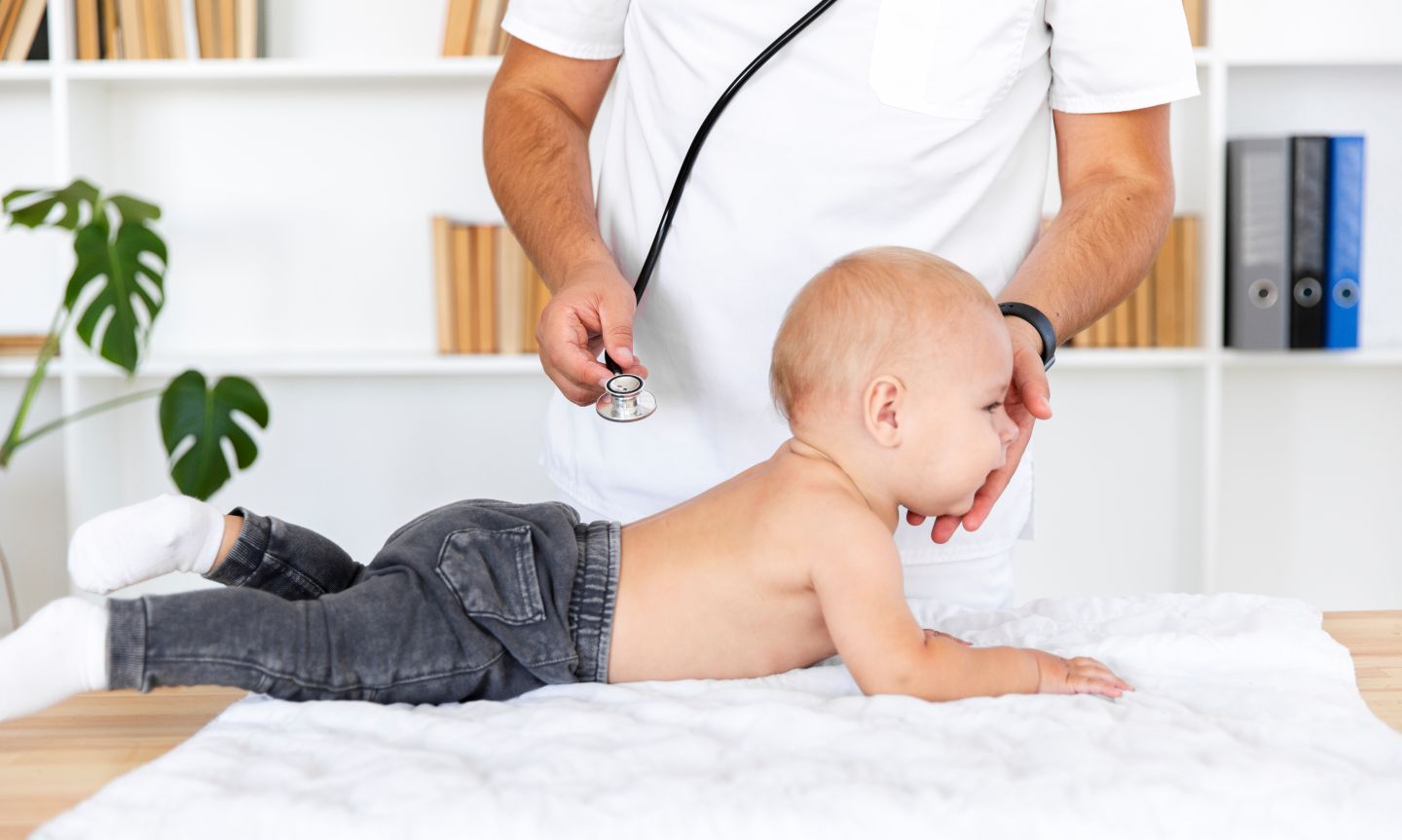
A reflection on training, evidence, and clinical practice
Within pediatric physiotherapy there is a topic as interesting as it is controversial: the role of manual therapy in babies and children. A topic that generates questions, debates and, at times, resistance. However, this conversation is urgent, because it can completely transform the results we obtain in the clinic.
If you work with babies, with musculoskeletal alterations, with breastfeeding difficulties, with plagiocephaly or with children who present pain, retractions, or functional alterations, this question is inevitable:
Do I need to know manual therapy to really help this patient?
Let’s explore it together.
What do we mean by manual therapy?
A simple and universal definition describes it as:
“The application of the hands on a living organism with a therapeutic purpose.”
This includes more than we tend to think: mobilizations, therapeutic massage, stretching, neuromuscular techniques, joint mobilizations and controlled manipulations, among others.
So… if massage, stretching and mobilizations are applied with a therapeutic purpose, clinical reasoning and technical control, are they manual therapy?
Yes, they are.
The challenge is that, in pediatrics, historically manual therapy has been little mentioned, little investigated and, at times, even avoided.
Why does resistance exist?
There are three main reasons:
- Fear that it may be dangerous.
It is assumed that children are more fragile and that manual therapy could harm them. - Lack of conceptual clarity.
In the scientific literature we find studies in which osteopathy, chiropractic, cranial approaches, physiotherapeutic mobilizations and massage are mixed under the same label. - Scarce specific training.
Many postgraduate programs in pediatric physiotherapy barely include manual therapy content.
In contrast, in adult training, there is a solid, progressive and standardized framework.
But is it safe?
Available reviews show that manual therapy in pediatrics is safe when applied correctly, especially when performed by professionals trained in pediatric physiotherapy.
The few adverse effects reported are mainly related to:
- High-velocity manipulations not indicated in children
- Interventions performed without pediatric anatomical knowledge
- Techniques applied by professionals not specifically trained in the area
What is risky —and happens more often than it seems— is the opposite:
mobilizing pediatric joints without knowing biomechanics, physiological limits, end-feel characteristics and the anatomical adaptations specific to childhood.
The absence of trained manual therapy is, at times, more dangerous than its conscious use.
Areas where manual therapy is essential
There are fields where evidence, clinical experience and outcomes show that manual intervention is not only useful: it is necessary.
✔ Pediatric respiratory physiotherapy
✔ Orofacial alterations and breastfeeding
✔ Neuropediatrics (spasticity, deformities, subluxations and tone management)
✔ Plagiocephaly and positional cranial deformities
✔ Pediatric musculoskeletal pain
✔ Pediatric sports physiotherapy
In these cases, exercises, cognitive tools or support devices do not replace manual intervention. They complement it.
The real challenge
The question is no longer whether manual therapy should exist in pediatrics.
The question is:
Are we prepared to apply it with safety, knowledge and clinical judgment?
Because tomorrow, in your clinic, a baby with torticollis, a girl with recurrent headaches or a teenage athlete with persistent pain will arrive.
And at that moment, you will need more tools than exercises and global stimulation.
Toward a more complete pediatric physiotherapy
The PIMT approach integrates manual therapy and neurodevelopment, but it does not oppose them or rank them. It intertwines them.
Because movement, function, posture and the child’s sensory experience are not separable.
Pediatrics needs hands that are trained, sensitive, safe and well-founded.
To continue learning
If this topic sparked questions or curiosity, there are free resources, in-person trainings and online programs available to go deeper.
📌 YouTube talks
📌 Free introductory courses
📌 Advanced programs in manual therapy and neurodevelopment
To close
Manual therapy applied to pediatric physiotherapy is not a trend, nor a substitute, nor an isolated technique.
It is a tool with rigor, with growing evidence and with real impact.
And if you are reading this, it is probably because, like many professionals, you want to help more and better.
Thank you for being in that place where change begins.
Comments are closed.