


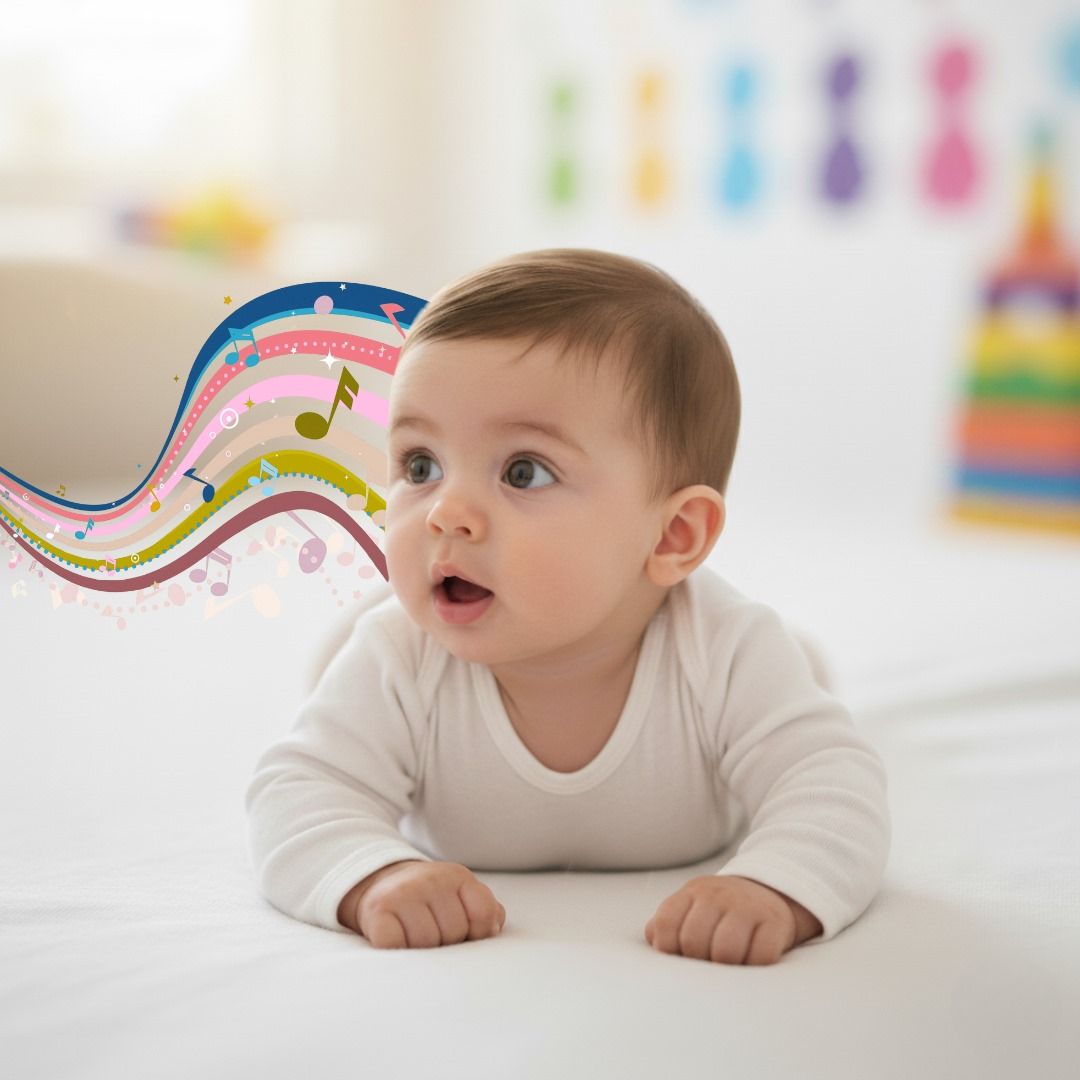
A clinical, close, and preventive perspective to protect language and neurodevelopment from the very beginning.
Why look beyond newborn screening?
Newborn hearing screening is a great start, but it’s only that: a filter. It doesn’t diagnose everything, nor does it cover changes that may appear over time. A baby may “pass” at birth and still develop later hearing loss that affects how they respond to their environment and build language.
During the first year, the clinical eye of the pediatric professional remains irreplaceable. Observing whether the baby reacts to a voice, seeks the source of a sound, calms down with a familiar tone, or whether babbling progresses is a simple and effective form of clinical prevention. When something doesn’t add up, we can refer in time to audiologists or speech therapists for specific studies.
It is also important to name the “blind side” of screening: there are false negatives and cases of late-onset or progressive loss. Put simply: today’s result does not guarantee tomorrow’s. That’s why throughout the first year it’s wise to look and look again at the baby’s responses, especially if there are risk factors. This continuous vigilance lowers family anxiety and helps us avoid surprises down the road.
From a practical rule to a clear plan
When accompanying a family, explaining the practical rule “first screening, then diagnosis, then support” brings order to the process. In consultation terms: screening within the first month, diagnosis before three months, and support before six months. There’s no need for a technical lecture; a clear and human plan that shows what comes next and who can help is enough. The earlier we act, the better the outlook for the child’s language, learning, and social and school participation.
Hearing is not the same as listening
Hearing is detecting sounds; listening is interpreting them and giving them meaning. Listening involves processing, interpreting, and understanding what is heard. Babies who startle at a noise (they hear) but don’t sustain attention to the voice or don’t respond consistently to their name (listening). This distinction helps explain to families why sometimes we need to look more closely and why a referral to specialists can make the difference.
More trained hands for clinical screening
We need more pediatric health professionals trained to carry out basic hearing screening during routine check-ups. A well-done clinical screening — added to the observation of motor development, postural control, visual orientation, and balance — allows us to detect early signs and make timely referrals to expert audiologists or speech therapists for more complex studies.
Auditory development matures in relation and co-dependence with other neurodevelopmental systems. Motor, visual, and vestibular functions work together with hearing to build communication and language. When one of these systems is “out of time,” correlations often appear across several domains — something common in neurodevelopmental disorders.
Clinical prevention that adds up
Beyond auditory responses, craniofacial development, nutrition, and breathing also matter. Alterations in facial shape and growth, a high or shallow palate, bite issues, mouth breathing, or recurrent otitis can alter middle ear ventilation and cause fluctuating hearing that confuses both the baby and the adults around them. Identifying these signs in routine check-ups and coordinating with the right team is part of the same prevention map.
Closing
Evaluating auditory development during the first year is a task perfectly within reach of pediatric health teams. It doesn’t replace screening: it complements it. With clinical observation, clear communication, and timely referrals, we protect the child’s language and neurodevelopment from the start.
Bibliography
- Pre-school hearing screening is necessary to detect childhood hearing loss after the newborn period: a study exploring risk factors, additional disabilities, and referral pathways. (2024). International Journal of Audiology (published by Taylor & Francis Online).
- Zheng, P., Zhong, X., Wang, Q, Hu, F., Yu, S., Chen, Y., … & Luo, S. (2022). Effectiveness of universal newborn hearing screening: A systematic review and meta-analysis. Journal of Global Health, 12, 12006.
- Munar, E., Rosselló, J., Mas, C., Morente, P., & Quetgles, M. (2002). El desarrollo de la audición humana. Psicothema, 14(2), 247–254.
- Mandujano, M., Sánchez, C., Katonab, F., & Berenyib, M. (2016). Bases de la función vestibular en el diagnóstico y manejo terapéutico de los neonatos y lactantes. Crecimiento y Desarrollo, 88(2), 48–52.
- Rine, R. M., Braswell, J., & Sparto, P. (2004). Improvement of motor development and postural control following intervention in children with sensorineural hearing loss and vestibular impairment. International Journal of Pediatric Otorhinolaryngology, 68(9), 1141–1148.
- Collisson, B. A., & Tough, S. (2016). Cognitive, language and motor development of infants exposed to risk and protective factors. International Journal of Pediatric Otorhinolaryngology, 138, 110353.
- Finck, N. S., Pacheco, M. C. T., & de Araújo, M. T. M. (2024). Association of clinical indicators in TMJ, craniofacial, occlusal, and upper airway changes with symptoms of pediatric obstructive sleep apnea and mouth-breathing. CRANIO: The Journal of Craniomandibular Practice.
- Bernkopf, E., Cristalli, G., de Vincentiis, G. C., Bernkopf, G., & Capriotti, V. (2022). Temporomandibular Joint and Otitis Media: A Narrative Review of Implications in Etiopathogenesis and Treatment. Medicina, 58(12), 1806.
- Huang, Y. S., & Guilleminault, C. (2013). Pediatric obstructive sleep apnea and the critical role of orofacial growth: evidence. Frontiers in Neurology, 3, 184.
Comments are closed.