


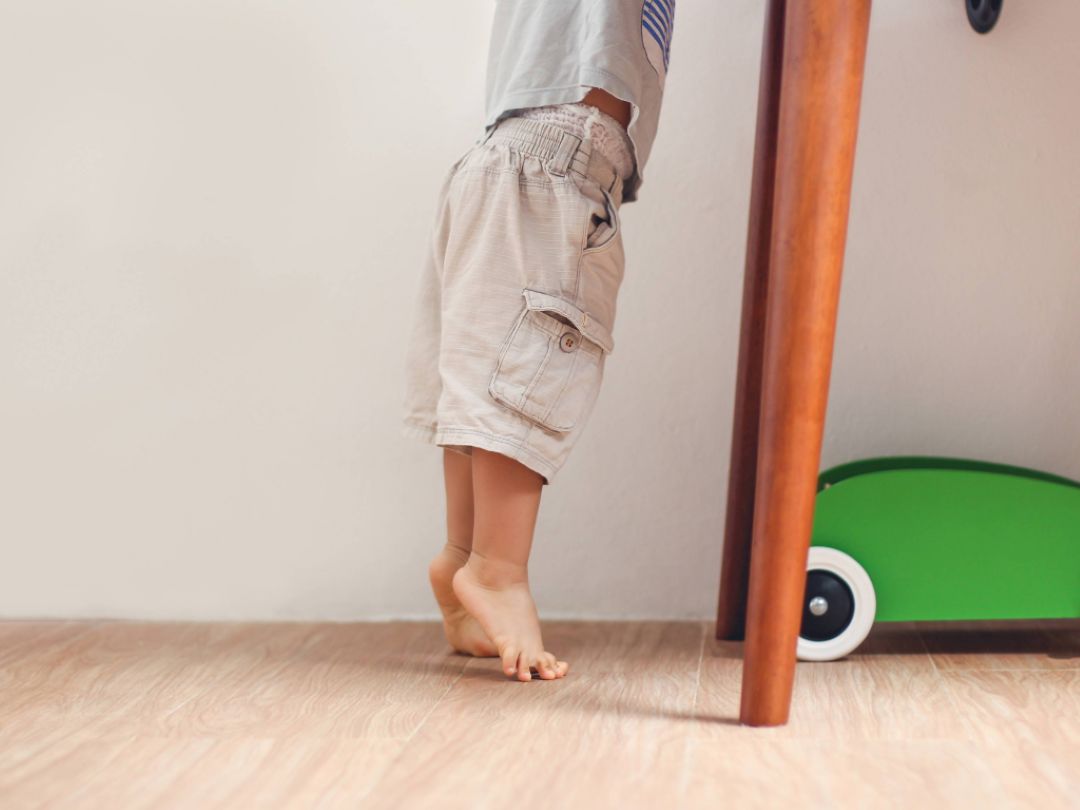
Let me walk you through the differences so you can improve your diagnosis
with a surprise at the end
The differences between idiopathic toe walking (ITW) and neurological toe walking (such as in cerebral palsy) are key for accurate diagnosis and effective therapeutic approach (Schlough et al., 2020; Habersack et al., 2022).
Here’s a clear and clinical summary:
And in this infographic, you’ll find it even more condensed
🧠 NEUROLOGICAL ORIGIN (e.g., Cerebral Palsy)
- Known cause: damage or lesion in the central nervous system.
- Altered muscle tone: suele typically spastic hypertonia, especially in the triceps surae.
- Abnormal reflexes: tonic reflexes, clonus, positive Babinski sign.
- Secondary muscle contracture: due to sustained postural pattern.
- Global motor issues: developmental delays, balance and coordination problems, and other neurological comorbidities.
- Altered specific tests: Silfverskiöld test may show real contracture of the gastrocnemius and/or soleus.
🚶♂️ IDIOPATHIC TOE WALKING (ITW)
- Unknown cause (idiopathic): no evident neurological injury.
- Normal or slightly increased tone: without spasticity.
- Normal reflexes:: no clonus or pathological reflexes.
- Adaptive shortening: secondary contracture due to habitual toe-walking.
- Symmetrical: usually affects both feet similarly.
- Altered sensory perception (in many cases): children may seek increased proprioceptive input or present plantar hypersensitivity.
- Silfverskiöld test: often shows that dorsiflexion is possible when the knee is flexed, suggesting isolated gastrocnemius shortening.
As you can see, both types of toe walking have distinct features, but clinical diagnosis is never based on gait alone. It involves specific clinical tests, evaluation of global motor development, neurological and perinatal history, and sensory profile
But wait…
What does neurological really mean?
Is neurological only about brain damage?
Aren’t neurodevelopmental disorders neurological too?
Isn’t autism neurological?
Aren’t neurosensory-motor dysfunctions neurological?
Maybe they’re more qualitative in nature,
but they cause suffering just the same.
In reality, idiopathic toe walking is a disorder of motor control, of tactile sensitivity in the soles of the feet, and of proprioception.
These children often show tonic pattern alterations, and in many cases, global coordination issues and behavioral differences.
Is it really that easy to differentiate idiopathic toe walking from neurological toe walking?
Comments are closed.