


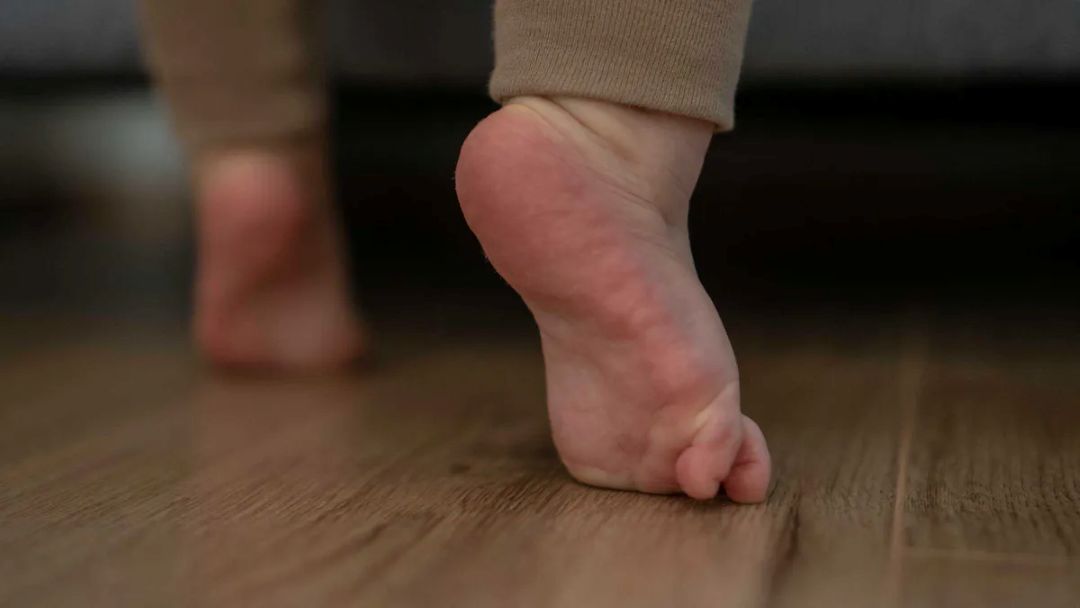
The curse of pediatric physiotherapists and doctors
Toe walking, present in around 15% of the population (studies show 12% and others 20%), seems to drive clinicians crazy. But it’s even more challenging for families who see that no treatment improves their child’s condition.
It is associated with sensorimotor alterations, neurodevelopmental disorders (e.g., autism), or intestinal dysbiosis, among others. However, it is often treated as merely a short myotendinous unit.
Here are 5 reasons for your poor results. If you have excellent results and resolve all cases, this clinical note is not for you.
Reason 1. You think it’s a short muscle.
This is the main reason for therapeutic failure. The actual muscle shortening is the consequence, not the cause. The first thing that occurs is hypertonia and an alteration of the motor pattern. In many cases, the child can put the heel down at certain moments. If they can sometimes put the heel down, it means that the shortening is not the primary reality at that moment.
Tiptoe gait is much more complex and is not a local problem but a global one, involving tone, sensorimotor patterns, or neuroinflammation.
Reason 2. You don’t recognize that there are various types of tiptoe walking.
There is the behavioral type in emotional situations, the bouncing type, the constant type, and the one that depends on the surface on which the child walks. Each of these types is associated with different factors that require a distinct approach, of course.
In the behavioral type, we are dealing with central sensorimotor alterations, which require a more global approach.
In other cases, it is necessary to regulate the tactile reactivity of the foot.
Reason 3. Your main treatment is stretching.
Closely related to the first point. This is actually the MAIN cause of failure. How long do you stretch? 1 minute? 15 minutes? How do you manage the child’s age and discomfort?
Is it passive stretching? After the minutes of stretching, how much time does the child spend lying down with stretched feet, or how many hours do they walk on tiptoe afterward?
For it to work, it would have to be an active eccentric work for a long time to create sarcomeres in series. Something almost impossible for a child. Moreover, as mentioned before, sometimes the heel touches the ground or the child reacts differently to various surfaces. What muscle reacts differently to different surfaces?
Reason 4. You don’t realize that orthotics may be needed.
If after 3-5 sessions of good manual therapy, taking into account the neuromenigeal system, among others, you do not achieve 90º of dorsiflexion, you may need orthotics or serial casts. There’s no other way. If the stiffness or consequent shortening is well established, you will have to consider this.
Reason 5. You haven’t organized a neuro-sensorimotor intervention plan.
The way of sensing and the structure of the motor plan are usually altered. This means that intervention at the central level is needed. Studies on the relationship between microbiota and neuroinflammation in toe walking also point in this direction.
This implies a general intervention on neurodevelopment and its neurosensory-motor alterations. In addition to intervention on nutrition and possible intestinal dysbiosis.
This part needs to be organized, but not everyone has a clear vision of what needs to be done. The key is in PIMT 4. Go back to that seminar or update your knowledge. Or seek more training on this topic. The toe walking course offers this possibility. You can find it here.
There are other reasons for the lack of results, such as using simple insoles instead of ankle-foot orthoses (AFO), or starting treatment too late, thinking it will resolve on its own.
This last one is undoubtedly the saddest.
Comments are closed.