Terapia Manual Pediátrica Integrativa (TMPI) Terapia Manual Pediátrica Integrativa (TMPI)
  • The PIMT Concept
  • PIMT Training
    • Essential PIMT Training
    • Specialized PIMT Training
    • Online PIMT Training
  • Team
  • PIMT Professionals
  • Blog
  • Contact us
  • PIMT CLUB
    • Plans
    • Private area PIMT CLUB
  • English
    • Spanish
Terapia Manual Pediátrica Integrativa (TMPI) Terapia Manual Pediátrica Integrativa (TMPI)
  • The PIMT Concept
  • PIMT Training
    • Essential PIMT Training
    • Specialized PIMT Training
    • Online PIMT Training
  • Team
  • PIMT Professionals
  • Blog
  • Contact us
  • PIMT CLUB
    • Plans
    • Private area PIMT CLUB
  • English
    • Spanish
Mar 31

Toe walking: beyond the calves, an integrative perspective

  • 31/03/2026
  • equipo tmpi
  • Uncategorized

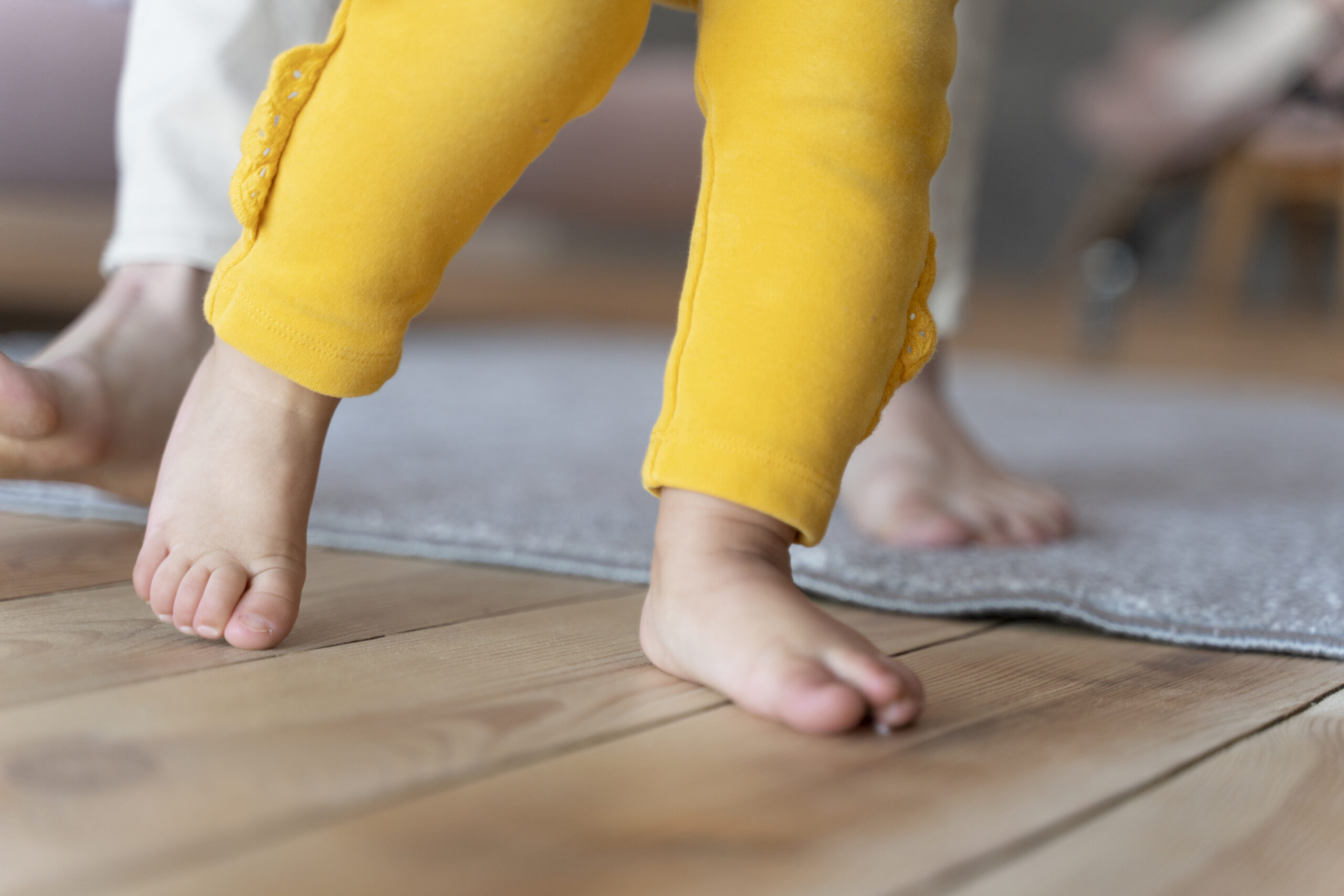
It is common for families and professionals to become concerned when a child walks on their toes.
Traditionally, this behaviour has been associated with shortening of the calf muscles or the Achilles tendon. However, this explanation is often insufficient.

From an integrative perspective, toe walking is not just a muscular issue: it is an expression of the child’s overall development.

A symptom, not a diagnosis

Toe walking should not be approached as an isolated problem, but rather as a sign that invites us to observe the child as a whole.

It may be related to multiple factors:

▪️ Sensory organisation.
▪️ Regulation of muscle tone.
▪️ Integration of primitive reflexes.
▪️ Postural development and balance control.
▪️ Proprioceptive processing.

Reducing the intervention to calf stretching may lead to missing key information about the origin of the pattern.

The role of the nervous system

The video highlights an essential point: many children who walk on their toes do so because of a particular way of organising their nervous system, not because of a structural limitation.

In these cases, the child may:

▪️ Seek greater stability or security.
▪️ Avoid certain sensory stimuli.
▪️ Need more proprioceptive input.

Toe walking then becomes an adaptive strategy, not a failure.

Assess before intervening

From PIMT, assessment is a fundamental step. Before proposing any treatment, it is necessary to understand:

▪️ When does the pattern appear?
▪️ Is it constant or intermittent?
▪️ What is the child’s overall motor development like?
▪️ What happens in other areas (play, regulation, posture)?

Only from this broad perspective can we design a respectful and effective intervention.

Supporting development, not correcting the symptom

The goal is not to “make the child stop walking on their toes”, but to promote a more mature organisation of movement.

This implies:

▪️ Offering rich sensorimotor experiences.
▪️ Facilitating bodily integration.
▪️ Supporting the development of balance and the base of support.
▪️ Working through play and relationship.

When the system reorganises itself, the pattern disappears or transforms naturally.

An invitation to change the way we look

Toe walking reminds us of something essential in clinical practice:
the child’s body always has meaning.

As therapists, our role is not only to intervene, but to understand what that body is telling us.

If you would like to explore this perspective in greater depth and see clear examples, you can access the full video
here

  • Facebook
  • Twitter
  • LinkedIn
  • E-Mail

Comments are closed.

E-Mail: info@tmpi-pimt.com
  • Essential PIMT Training
  • Specialized PIMT Training
  • Online PIMT Training
  • Personal Area PIMT CLUB
  • Legal Notice and Data Protection Policy
  • Cookies Policy
  • Headshape App
© Copyright 2026 Terapia Manual Pediátrica Integrativa (TMPI)
Utilizamos cookies propias y de terceros para optimizar tu navegación, adaptarnos a tus preferencias y realizar labores analíticas. Si continuas navegando consideramos que aceptas nuestra Política de Cookies.
Privacy & Cookies Policy

Privacy Overview

This website uses cookies to improve your experience while you navigate through the website. Out of these, the cookies that are categorized as necessary are stored on your browser as they are essential for the working of basic functionalities of the website. We also use third-party cookies that help us analyze and understand how you use this website. These cookies will be stored in your browser only with your consent. You also have the option to opt-out of these cookies. But opting out of some of these cookies may affect your browsing experience.
Necessary
Always Enabled
Necessary cookies are absolutely essential for the website to function properly. This category only includes cookies that ensures basic functionalities and security features of the website. These cookies do not store any personal information.
Non-necessary
Any cookies that may not be particularly necessary for the website to function and is used specifically to collect user personal data via analytics, ads, other embedded contents are termed as non-necessary cookies. It is mandatory to procure user consent prior to running these cookies on your website.
SAVE & ACCEPT