


If you have a baby gym at home, this article is for you.
It is not that it is a “bad” item, but rather that it is often used in a way that does not support the baby’s natural development… and may even interfere with it.
The most common use… and the problem
It is very common to place the baby on their back, directly underneath the hanging toys of the baby gym.
At first glance, it seems like a good way to stimulate them.
However, this type of stimulation may not be the most appropriate during the first months of life.
Why?
Because a baby’s development follows an order. And when we bring certain stimuli in too early, we may generate overload or make processes that are still under construction more difficult.
How the baby develops in the first months
During the first weeks, the baby spends a lot of time with the head turned to one side.
This is not random:
▪️ It helps prevent asphyxia.
▪️ It promotes safety in the presence of reflux.
▪️ And, above all, it reflects how the baby’s brain functions at this stage.
At the beginning, the cerebral hemispheres are not yet fully integrated. In other words, the right and left sides of the body are not yet working in a coordinated way.
Because of this:
▪️ The baby first explores the sides
▪️ And later begins to integrate the midline (what is directly in front of them)
This process takes time… and it is essential to respect it.
Three risks of inappropriate baby gym use
- Visual overload
When we place objects directly in front of the baby, we force them to coordinate both eyes before they are ready.
This may generate:
▪️ Excessive visual effort.
▪️ Difficulties with ocular coordination.
▪️ In some cases, it may contribute to ocular deviations. - Difficulties in hand-eye coordination
Before 4 months of age, the baby cannot voluntarily reach for objects.
And one important point:
the hands only begin to coordinate at the midline at around 5 months.
If we place stimuli directly in front of the baby:
▪️ Lateral exploration is skipped
▪️ Coordination that is not yet mature is forced
▪️ It may affect eye–neck–hand integration - Risk of cranial deformities
Excessive time spent lying on the back may generate alterations in head shape:
▪️ Plagiocephaly (lateral flattening)
▪️ Brachycephaly (posterior flattening)
Today we know this is becoming increasingly frequent, and prolonged use of the baby gym in this position may contribute to it.
So… should you stop using the baby gym?
No.
baby gym is not the problem. The problem is how it is used.
3 recommendations for using it properly
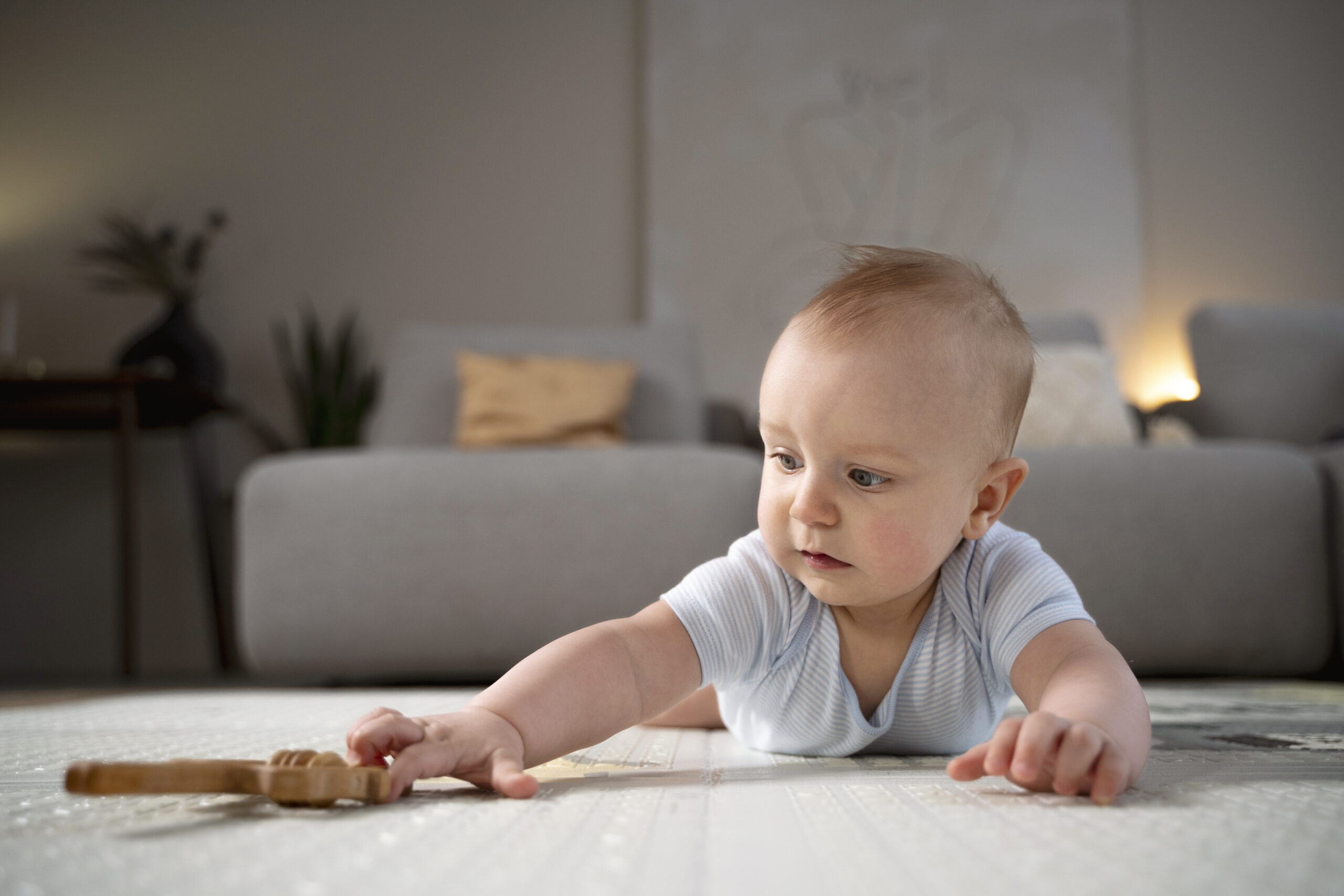
✔️ 1. Use it in the prone position
Place the baby on their tummy (tummy time), with the toys a little farther away.
This supports:
▪️ Head control
▪️ Weight-bearing through the arms
▪️ Intention to move
✔️ 2. Stimulate from the sides
Instead of placing the baby directly under the toys:
▪️ Place them slightly to one side
▪️ Allow them to look and orient laterally
▪️ Then alternate to the other side
This position supports the so-called “fencer posture,” which is fundamental for neurodevelopment.
✔️ 3. Limit the time
Development does not happen by looking at objects, but through interaction.
The baby needs:
▪️ Contact.
▪️ Voice.
▪️ Shared play.
▪️ Movement.
The baby gym can be a resource, but it should not replace bonding.
To conclude
Stimulating does not mean doing more, but doing what is appropriate at the appropriate time.
Respecting the timing of development is key to supporting healthy neurological organization.
If you have a baby gym, use it… but use it consciously.
Your support is always the best stimulation.
Below, we are sharing the video that gave rise to this content, where it is explained in a clear and practical way how to use the baby gym while respecting the baby’s development:
Baby gym: how to use it properly and avoid mistakes
Comments are closed.