


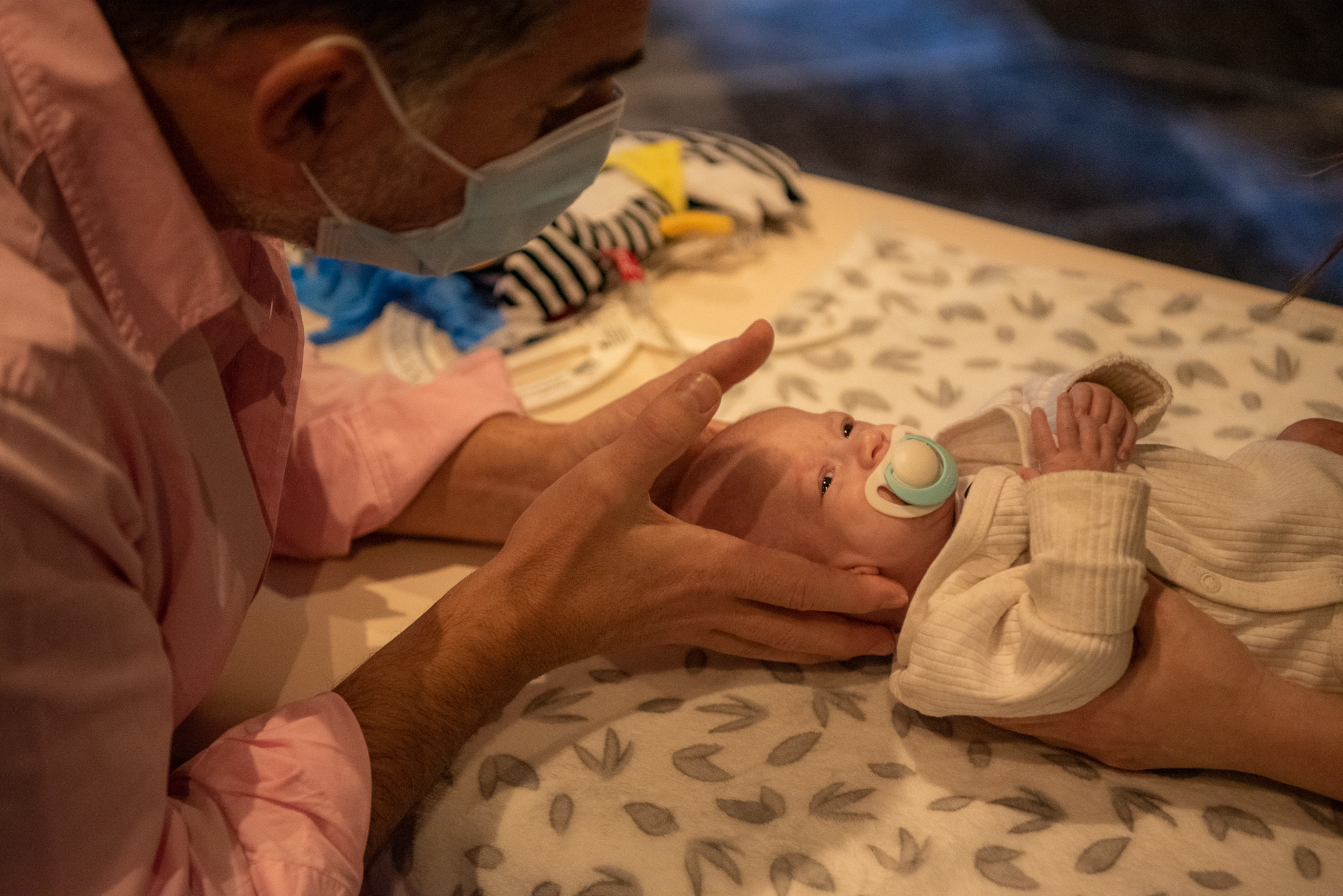
Is he a clinician? Is he a professor? Is he a researcher?
When asked how he defines himself, Iñaki Pastor Pons gives a different answer: he considers himself a bridge builder.
Bridges between areas that have traditionally worked separately: pediatric physiotherapy, manual therapy, neurodevelopment, oculomotor function, and clinical reasoning. His proposal is not to add techniques, but to integrate perspectives in order to offer a physiotherapy that is more complete, more coherent, and more humane.
What is PIMT?
TMPI stands for Pediatric Integrative Manual Therapy. It is not simply a technique, but a model for understanding pediatric physiotherapy.
According to Pastor, pediatric physiotherapy has developed in depth the management of major neurological pathologies—cerebral palsy, genetic syndromes, complex conditions—but something fundamental was missing:
A physiotherapy for all children.
Not only for severe disease, but also for:
▪️ Babies who need support in their development.
▪️ Plagiocephaly.
▪️ Sports injuries.
▪️ Common neuromusculoskeletal difficulties.
▪️ Everyday situations of growth.
PIMT integrates two areas that have historically been disconnected:
- Manual therapy in pediatrics.
- Neurodevelopment physiotherapy.
By bringing them together, it not only expands clinical possibilities, but restores meaning and coherence to professional practice.
Why is pediatric manual therapy necessary?
Pastor raises a very concrete question:
In any hospital, a physiotherapist treats children with fractures, immobilizations, torticollis, or sports injuries.
So, how is a pediatric joint mobilized?
Are the same rules applied as in adults?
Evidently not.
However, pediatric manual therapy continues to be a controversial topic. Part of the problem is that under the same term very different approaches are grouped together (chiropractic, osteopathy, various manipulations), which creates confusion in the scientific literature.
For Pastor, the issue is not whether it should exist, but that it is already part of everyday clinical practice. What is lacking is:
▪️ Clear criteria.
▪️ Safety.
▪️ Specific training.
▪️ Conceptual differentiation within physiotherapy.
The “CASA” criteria of pediatric manual therapy
Regardless of the school or approach, Pastor proposes basic criteria:
▪️ Comfortable: the child can relax; they could even fall asleep.
▪️ Adapted: to their age, characteristics, movement, and to the family.
▪️ Gentle: slow, respectful, minimizing risks.
▪️ Accompanied: the family is part of the process.
Safety is the central axis. It is not only about intervening, but about intervening with criteria, sensitivity, and responsibility.
Neurodevelopmental disorders: a growing reality
The current incidence is around 15% of the child population. That is, in many classrooms there are one or two children with this type of difficulty.
Neurodevelopmental disorders (ADHD, learning disorders, coordination disorders, language disorders, autism spectrum disorder, among others) do not affect only childhood. They extend into adolescence and adulthood, impacting social, work, and family life.
Pastor highlights several key points:
▪️ They are not exclusively “mental.”
▪️ There is an important subcortical component (balance, vestibular system, basic coordination).
▪️ There are relevant prenatal and epigenetic factors.
▪️ Prematurity is a significant risk factor.
▪️ Diagnoses show a high degree of overlap and comorbidity.
For this reason, he proposes going beyond the diagnostic label and understanding how each child functions within their context.
Integrative intervention: bottom-up and top-down
The comprehensive approach combines two complementary pathways:
▪️ Bottom-up: intervention starting from basic systems (sensory, vestibular, coordination).
▪️ Top-down: work from executive functions, tasks, cognition, and participation.
Reducing intervention to a single dimension – whether purely cognitive or exclusively motor – limits outcomes.
Interdisciplinary work is not a secondary option, but a real necessity. No professional holds the entire perspective. Integration multiplies effectiveness.
A unique editorial contribution in physiotherapy
In 2023, Elsevier published the book Pediatric Manual Therapy in Neuromusculoskeletal Alterations of the Baby and the Child, coordinated by Pastor together with other health professionals.
Among its distinguishing contributions are:
▪️ Development of a specific anatomy for the baby and the child (not extrapolated from the adult).
▪️ Structural and functional integration.
▪️ Clinical reasoning diagrams.
▪️ Evaluation and intervention proposals based on health standards.
In addition, a new manual on neurodevelopmental disorders with an integrative and interdisciplinary approach is being prepared, aiming to respond to the growing clinical demand in this field.
Final reflection
Perhaps the sentence that best summarizes the interview is this:
It is not the diagnosis that is treated. It is the child.
It is not a label that is treated.
It is not only a symptom that is treated.
It is not only a technique that is treated.
It is about understanding, integrating, and accompanying.
And in that bridge between knowledge, clinical practice, and humanity, pediatric physiotherapy has much more to contribute than we sometimes believe.
🎥 This reflection is expanded in the full interview with Iñaki Pastor Pons.
You can watch the video here
Comments are closed.