


Yes, I know—you’ve got scales.
Yes, they’re reliable and validated.
Yes, they give you an objective measure of the baby’s development compared to others of the same age and population.
Yes, they allow you to clearly communicate your results within an interdisciplinary team.
Yes, they give you the objectivity that supports your professional opinion.
Alright!
But even when using scales, there are tricks.
Tricks that make your assessment easier.
Let’s take the Alberta Infant Motor Scale (AIMS)
—probably the gold standard when it comes to evaluating motor and postural behavior.
(That’s why we designed a specific training focused entirely on this scale.)
And even with this scale, there are tricks that make things easier.
Here are several tips that will make your assessment more reliable and help you get it done in less time
1. Keep your distance from the baby
If the baby is older than 6 months, keep some physical distance. Don’t get too close. At this age, they start to recognize themselves as social beings and begin distinguishing “strangers.”
If you’re too close, you can influence their spontaneous behavior—which is one of the keys of the scale.
Under 6 months, it’s not as relevant, but over that age, respect their space. Let the baby be the one who gradually chooses to interact with you.
Ask the caregiver to place or undress the baby. Give clear instructions on what kind of stimuli to offer and where.
This way, you’ll get much more out of the scale.
2. Watch the lighting and avoid overstimulation
Run the assessment in a quiet place, with not too many toys, not too many colors, not too many sounds, no irritating ceiling lights—just not too much of anything.
Many babies are hyperreactive to different stimuli and can easily become uncomfortable or irritated.
Sometimes we think a pediatric physio clinic should be like a three-ring circus with elephants and everything.
But no… sometimes, less is more.
3. Ask the family
For example: they roll over well but don’t grab their feet—though they do touch their knees. Ask the family if they’ve seen the baby in that position you’re not observing.
If they say yes, ask for a photo or video from that same afternoon at home.
Then you can complete the scoring.
But it can’t be from two days ago—same day only.
4. Take off the onesie or pajamas—for goodness’ sake
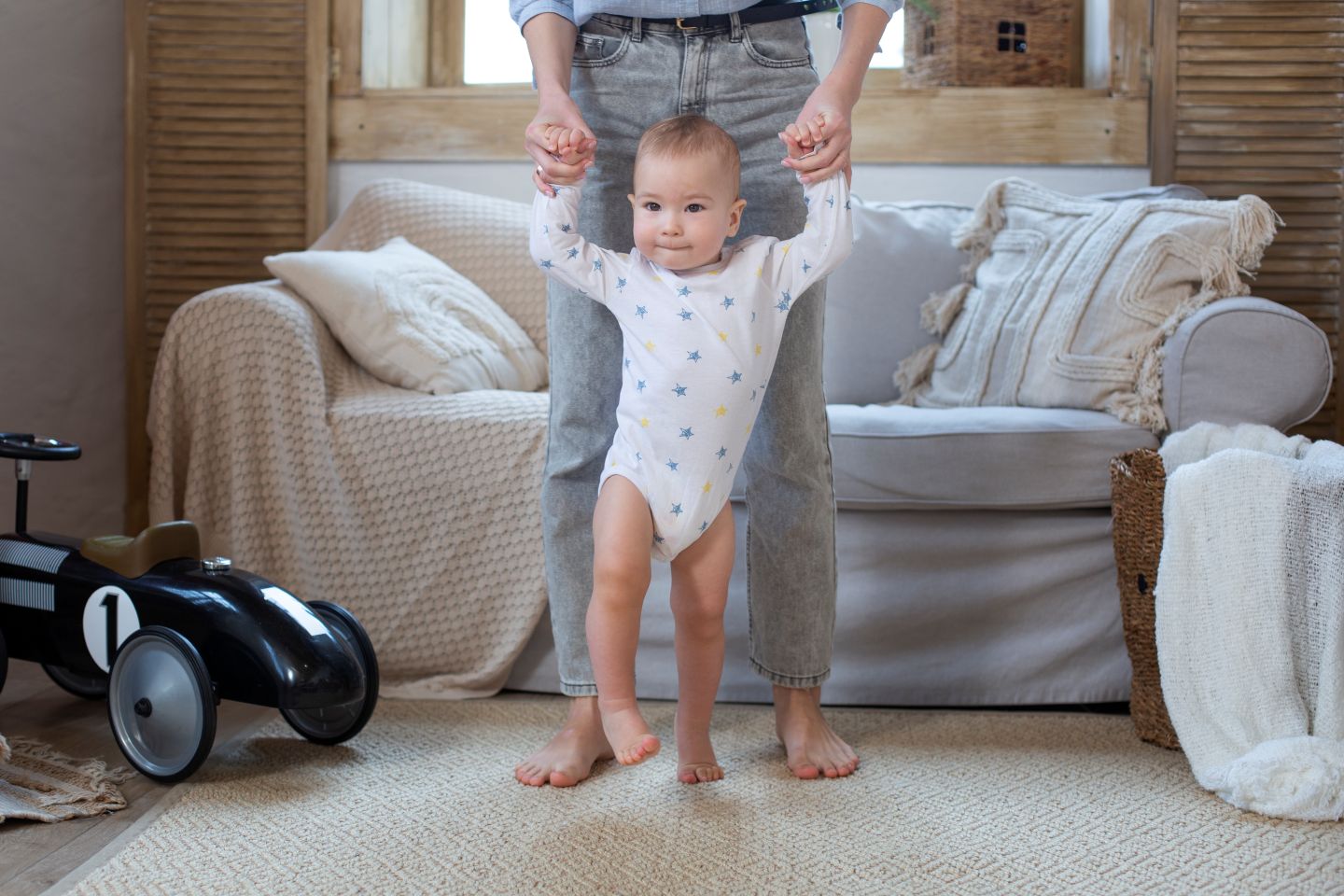
Babies need freedom to move. Many onesies or pajamas (as they’re called in Spain) are already too small. The baby in that tight clothing lifts their head less, moves with more effort.
Do the assessment in a diaper or even naked if you want—but not in clothing.
It may seem silly, but it makes a big difference.
Oh, and in some countries those oversized, washable cloth diapers are trending—and they totally block proper hip movement.
Take them off too or you won’t see what the baby can really do.
5. When in doubt… sorry… they don’t do it
I get it—baby physios and PTs are hopeful people. We’re optimistic.
The problem is, we often see the baby’s potential more than the actual reality. If the baby seems like they want to do something but doesn’t… it’s simple: they don’t.
If you’re unsure, ask for a video from that same day—but if you don’t have it… you don’t have it.
Your job will be to help the baby do it—and do it easily.
But don’t be too nice… be objective.
Have faith in your treatment… not in your assessment.
The online course on motor development assessment will be available by the end of April.
You won’t get another chance. Feel if it’s the right fit for you.
Big hug!
Comments are closed.