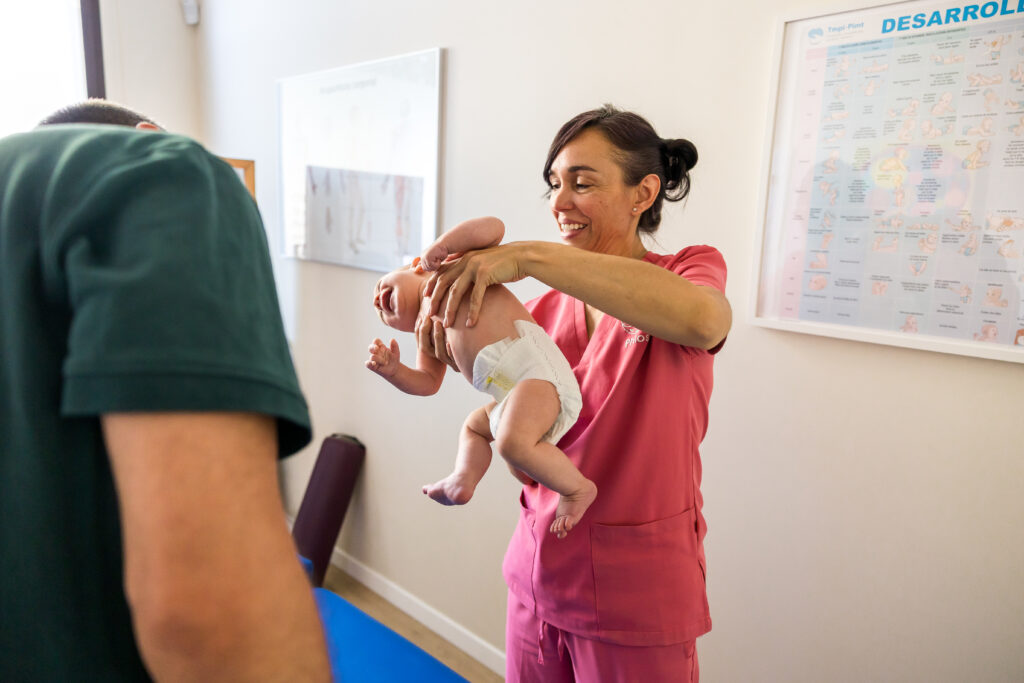
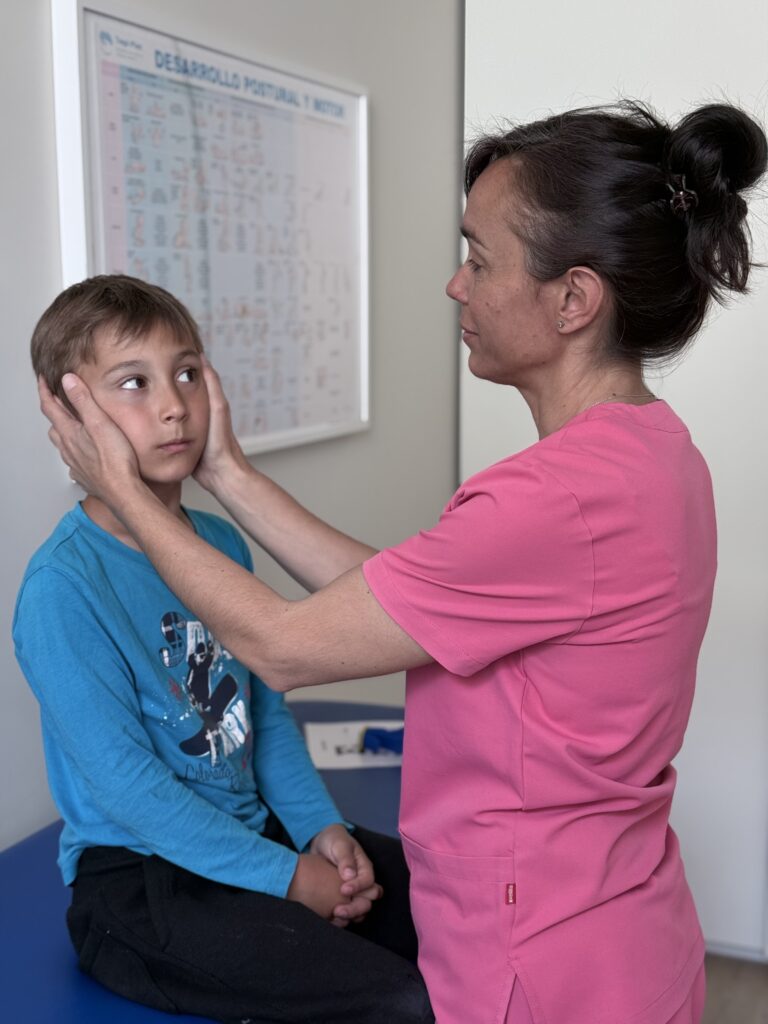
Have you seen children with attention difficulties, hypotonia, or coordination problems without being able to find the cause? The answer may lie in the vestibular system. This course will give you the precise clinical tools to go beyond the symptoms, identifying and treating the dysfunction at its source. Transform your practice and become the professional who truly makes a difference in child neurodevelopment.
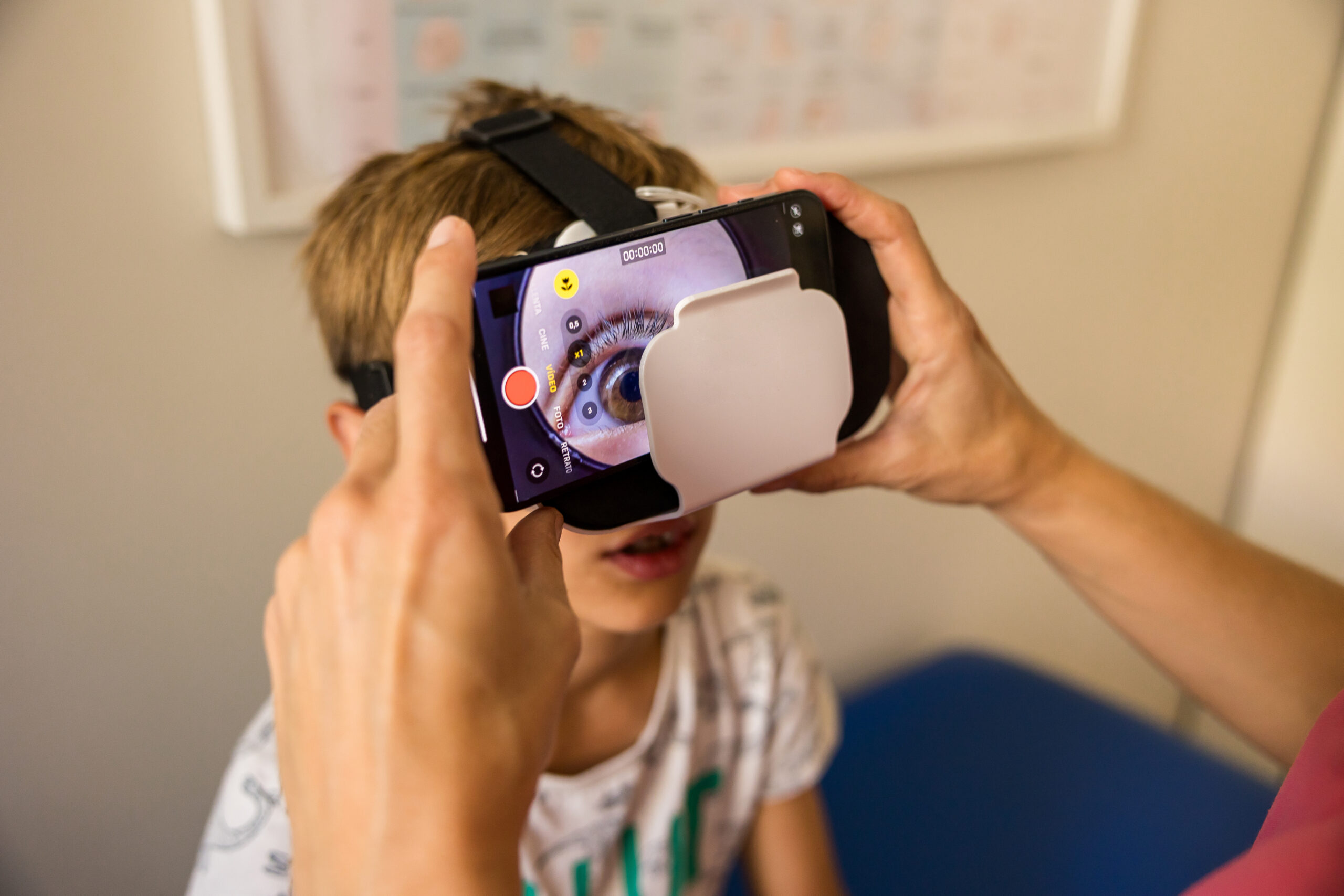
A UNIQUE COURSE IN SPAIN!
Vestibular intervention in paediatrics
BLENDED LEARNING MODE

The problem:
Many children come to our clinic with postural tone difficulties, delays in acquiring motor milestones, attention problems, or learning disabilities.
We implement interventions… and even then, the results are not always as expected.


Because?
Because in most cases the foundation that organizes and gives meaning to movement is being overlooked: the vestibular system.
The vestibular system is the “conductor” of neurodevelopment: it regulates tone, orients posture, organizes gaze, modulates attention, and serves as a bridge between the body and cognitive processes.
When it is not assessed and addressed, all clinical effort becomes fragmented and progress becomes slower, more superficial, or even unstable.
The result? Children who improve in some motor aspects, but who continue to have difficulties maintaining attention, learning fluently, organizing their movements, or regulating their behavior.
Do any of these statements resonate with you?
«I've never specifically worked on the vestibular system»
That is precisely why this course was created.
You don’t need prior experience to start. You will leave with a clear framework for what to assess, what to observe, and how to intervene without ever feeling like you are guessing. Rather than viewing the vestibular system as a complex topic reserved for a select few specialists, you will confidently integrate it into your clinical practice from day one.
«I don't know how to identify which children need this type of intervention»
You are likely already seeing them in your clinic.
Many children presenting with balance difficulties, motor delays, attention issues, movement anxiety, clumsiness, or learning difficulties—as well as infants missing key developmental milestones—have an underlying vestibular component that goes unnoticed. After this course, you will recognise these signs far more easily, knowing exactly when to intervene, when to refer, and how to guide families with confidence.
«Is there enough evidence for this type of intervention in children?»
Yes, and you will also learn to clearly distinguish between evidence-based findings and clinical reasoning.
Research into the paediatric vestibular system has expanded significantly in recent years, deepening our understanding of its link to motor development, balance, vision, attention, and learning. Throughout the course, we maintain a strictly evidence-based approach, teaching you how to critically appraise scientific literature and translate it responsibly into your daily practice.
Become an expert clinician in
vestibular
You go from “doing vestibular exercises” to understanding, evaluating, and applying
with clinical judgment the full potential of the vestibular system in babies
and children.
Learn to master the key to motor and sensory neurodevelopment
The system that will lead you to results

ONLINE PLATFORM
7 hours of structured content.
Neurophysiological bases of the vestibular system.
Relationship with vision and proprioception.
Unlimited access for the duration of the training.
Downloadable notes.
Downloadable mini clinical guides.

LIVE CONNECTIONS
1 webinar of clinical doubts.
2 webinar follow-up to support you in the implementation.
Recordings available on the platform.
Spaces to share experiences and reinforce what has been learned.
Direct contact with the teacher.

INTENSIVE IN-PERSON
4 days of real clinical practice.
Detailed evaluation of vestibular pathways: canalicular, otolithic, spinal and visual.
Design and application of clinical strategies.
Real cases and practical proposals ready to apply in your practice from day one.
What do professionals think of the teacher?
Manuel López Paéz


Natalia is a masterful teacher; she has such a command of the subject matter that she adds a special touch to the course topics, synthesizing and maximizing the material! 100% recommended.
Lucila To


Beyond her extensive academic background, which underpins her authority as a professor, Natalia Povedano captivates me with her mindset. Her network-oriented approach. Her generosity in sharing her clinical experience. And her practicality—she never leaves a concept without application. A unique opportunity for any neurodevelopmental professional. I will be there to continue connecting her knowledge with mine and to explore all the ways I can innovate my understanding and clinical application to better support neurodevelopment.
Estefanía Deshayes


Natalia has a wealth of knowledge and knows how to convey it spectacularly in her courses. She’s approachable with her students and makes what seems difficult to understand truly simple. She’s a wonderful teacher. Natalia is the MacGyver of the TMPI team: she always finds a solution using simple and inexpensive materials. She’s brilliant.
Lucas Villalta


Natalia teaches in a very clear and approachable way. She transforms difficult topics into something easy to understand and apply with children. She always conveys confidence, passion, and a wealth of experience.
Pilar López Paéz


A master at explaining complex concepts in simple terms, her extensive experience with the vestibular system in children ensures we learn all the essential knowledge we need in neurodevelopment. This is an unparalleled, unique course that will change the way you approach patient care.
What will you be able to do after the course?
Evaluate in detail
Remember and understand
- Recognize vestibular anatomy and physiology.
- Understanding how its development impacts tone, balance, attention, and learning.
- Apply clinical examination tools adapted to babies and children.
Analyze clearly
Clinical reasoning
- Interpret the evaluation results in an organized manner.
- Differentiate between canalicular, otolithic, spinal, and visual disorders.
- To detect clinical signs that explain difficulties in motor development, attention, or behavior.
Intervening on the baby and the child
Apply and reassess
- Select evidence-based clinical strategies: adaptation, habituation, compensation.
- Design clear and safe progressions that respond to the child’s needs.
- Evaluate the effectiveness of interventions in the real clinical context.
Organize the environment
Create and recommend
- Translate what has been learned into clear guidelines for the family and the school.
- Design enriched environments that enhance vestibular integration.
- Create personalized programs that connect the clinic with the child’s daily life.
Included in your Vestibular Intervention in Pediatrics Course
✅ Complete program and step-by-step checklist
✅ Gradual opening system (with guided learning path)
✅ 2 live Q&A sessions after the course for addressing clinical questions and 1 live session before the in-person portion.
✅ Bonus: “Create your own clinical materials for consultation assessment”
✅ Bonus: “Clinical reasoning applied to the vestibular system in neurodevelopment”
⭐ Mini Clinical Guides:
“6 Most Common Mistakes in Pediatric Vestibular Assessment and Intervention”
“Quick Checklist of Signs That Indicate a Child Needs Vestibular Intervention”
“How to Choose the Best Materials for Your Vestibular Sessions”
Vestibular Rehabilitation Manual Based on Susan Herdman
⭐ Downloadable family education brochures on vestibular play and participation in daily life
⭐ Access to future live sessions for Q&A and new materials
⭐ Vestibular assessment protocols for babies and children
⭐ Clinical forms for history taking and follow-up
⭐ Effective communication strategies with families to improve adherence
⭐ Course notes and charts, plus supplementary materials
What babies and children will completely change with your work?
Hypotonic babies and children
Vestibular stimulation is one of the main pathways for regulating muscle tone. Without this pathway, you won’t make any progress.
Coordination and balance problems
In early intervention, these two problems significantly hinder a child’s overall development. The vestibular system underlies both of these functions.
Neurological damage
Motor, sensory, and muscle tone development is built from the vestibular system. Therein lies an opportunity to achieve something more.
ADHD, Autism and other neurodevelopmental disorders
Como eje central de neurodesarrollo, el sistema vestibular es clave en la intervención en alteraciones neurosensoriomotoras infantiles.
As a central axis of neurodevelopment, the vestibular system is key in the intervention in childhood neurosensory-motor disorders.
Once again, the vestibular system is implicated in neurodevelopmental disorders that present with apparent cognitive and affective difficulties. Evaluate this system and you’ll see it very clearly.

Natalia Povedano Valverde
Physiotherapist.
Master of Science in the Nervous System.
Expert in neurodevelopment, international instructor of Integrative Pediatric Manual Therapy (TMPI-PIMT).
Lecturer of the Postgraduate Course in Pediatric Physiotherapy at the ONCE University School of Physiotherapy.
Questions you may have
Explore and acquire training

ZARAGOZA
OPEN REGISTRATION
Vestibular intervention in paediatrics
ACCESS FROM: 15/10/25
IN-PERSON: November 17 to 20
PLACE: Hotel NH Ciudad de Zaragoza (Zaragoza)
ORGANIZE: TMPI Internacional

SEVILLA
OPEN REGISTRATION
Vestibular intervention in paediatrics
ACCESS FROM: 21/04/26
IN-PERSON: June 11 to 14 2026
PLACE: to confirm
ORGANIZE: Grupo Fysio

MADRID
OPEN REGISTRATION
Vestibular intervention in paediatrics
ACCESS FROM: 01/10/26
IN-PERSON: November 28 to 30, December 01 2026
PLACE: to confirm
ORGANIZE: TMPI-PIMT
Course curriculum
THE PIMT CONCEPT
• A new way of understanding pediatric physiotherapy.
• The structure-function relationship.
• A developmental model.
• A collaborative model.
• A dual model of neurodevelopmental intervention.
WHAT ANATOMY AND DEVELOPMENT REVEAL
• Key vestibular anatomy that explains clinical presentation.
• The vestibular system in living beings → What evolution teaches us about the vestibular system.
• Apparatus vs. System → Why speaking of a “system” changes how you evaluate it.
• Peripheral vs. Central → What differences allow you to broaden your perspective.
- Peripheral → What the periphery tells you about vestibular clinical presentation.
- Central → Keys to recognizing central alterations in children.
• Anatomical and physiological development → Developmental milestones in the vestibular system that guide your intervention.
HOW THE VESTIBULAR SYSTEM WORKS AND WHAT IT IMPLIES IN CLINICAL PRACTICE
• The starting point for understanding the patient.
• Characteristics → The unique features that make the vestibular system special.
- Law 1 → The basic laws that govern this system and are key.
- Law 2 → The second basic law.
VESTIBULAR PATHWAYS: WHAT EACH CONTRIBUTES TO DEVELOPMENT
• The map that connects the vestibular system to the entire body.
• Vestibulocerebellar pathway → How the cerebellar pathway organizes motor control.
• Vestibulo-ocular pathway → Why the connection with the eyes is essential for learning and attention.
- Physiology of Nystagmus → What nystagmus reveals in clinical practice.
- Physiology of Optokinesis → The role of optokinesis in child development.
• Vestibulospinal pathway → How this pathway regulates muscle tone and posture in your patients.
• Vestibulocortical pathway → The vestibular impact on executive functions and behavior.
• Vestibulovegetative pathway → Why the vestibular system also affects internal regulation.
VESTIBULAR FUNCTIONS YOU CAN'T IGNORE
• Understanding these functions changes how you intervene.
• Subcortical functions → The automatic responses that support motor development.
• Cortical functions → What the vestibular system contributes to cognition and behavior.
THE VESTIBULAR SYSTEM IN NEURODEVELOPMENTAL DISORDERS
• Why the vestibular system presents a challenge in childhood disorders.
• Symptoms of impaired programming → How to recognize the hidden signs of vestibular immaturity.
• Etiological factors → What causes vestibular dysfunction in children.
• Hearing and the vestibular system → The forgotten relationship: inner ear and balance.
• Craniocervical complex and vestibular system → How cervical posture influences the vestibular system.
• Relationship with neurodevelopmental disorders → What role does the vestibular system play in ADHD, ASD, and other diagnoses?
VESTIBULAR PATHOLOGY IN PEDIATRICS
• Vestibular pathologies in pediatrics → What pathologies should you recognize in order not to miss key diagnoses.
CLINICAL EVALUATION IN INFANTS AND CHILDREN
• How to begin an assessment with confidence and accuracy.
• Red flags → Warning signs you shouldn't ignore.
• Standardized instruments → Which tools to use for rigorous assessment.
• Assessment in infants → How to detect vestibular disorders from the beginning of life.
- Vestibular-ocular pathway → What the eyes reveal about the vestibular system.
- Vestibular-spinal pathway → What to observe in postural control and muscle tone.
- Vestibular-cortical pathway → The role of the vestibular system in early cognitive development.
• Assessment in children → Keys to evaluating the vestibular system in school-aged children.
- Vestibular-ocular pathway → How to explore visual coordination and its impact on learning.
- Vestibular-spinal pathway → Detecting motor disorders related to balance.
- Vestibulo-cortical pathway → How to relate vestibular symptoms to higher functions.
CLINICAL INTERVENTION STRATEGIES
• Vestibular intervention → How to design an effective intervention plan.
• Intervention by developmental stages → What to work on according to the child's age.
• Intervention by pathways → How to stimulate each vestibular pathway in the clinic.
EDUCATIONAL PHYSIOTHERAPY: HOW TO SUPPORT THE BABY IN THEIR DEVELOPMENT
• The Importance of Educational Physiotherapy → Why prevention and education change a child's future.
• Movement → Movement as the first medicine for development.
• Neurodevelopment → How the vestibular system drives each milestone in a baby.
• Environmental Factors → What environment promotes (and what hinders) a baby's learning.
• Games and Exercises → Practical ideas for stimulation while the baby enjoys themselves.