


If you don’t have any of these, you’re falling behind and taking some risks.
Which book should clinicians choose if they really want to understand these conditions and improve their practice?
The truth is that while there is plenty of content for adults, in pediatrics it’s hard to find books that organize ideas clearly and truly allow for progress.
It’s quite surprising how few texts exist on this subject. While some pediatric traumatology or orthopedics books serve as references, they are primarily written for doctors. However, they are still very useful for deeper understanding, as well as for recognizing severe conditions that may arise from time to time. They provide a comprehensive view of clinical reality, contribute significantly to evaluation tests, and, importantly, help you understand a doctor’s mindset.
However, these books do not guide physiotherapists or occupational therapists in specific interventions within their field. Everything is presented based on intervention standards, often with a bias toward overvaluing surgery.
Some areas also have limitations in their approach. For example, neurodynamics is not commonly considered by doctors.
Well, actually, not by most pediatric physiotherapists either. Sad, isn’t it?
Simply transferring clinical books for adults to babies and children can be problematic. Some conditions are highly specific to pediatrics. Also, many disorders seen in adults began in childhood—this is the period when proper interventions could have been made. Unfortunately, they weren’t always done. In fact, physiotherapy has not always been attentive and precise with children undergoing typical development. And remember, it’s not just “neuro” kids who have postural and neuromusculoskeletal issues.
Conditions like genu valgum, genu varum, flat feet, scoliosis, and fractures are extremely common. And tell me, who in university actually studied pediatric traumatology in depth?
And most importantly—even if you’ve done PIMT!
You’re still lacking knowledge to detect truly serious conditions. That alone justifies having at least one of these books.
Okay, fine, here are my three favorites.
Fundamentals of Pediatric Orthopedics de Lynn Staheli. 5ª Ed. Precio: 147 $ . Ed Wolters Kluwer. 2015.
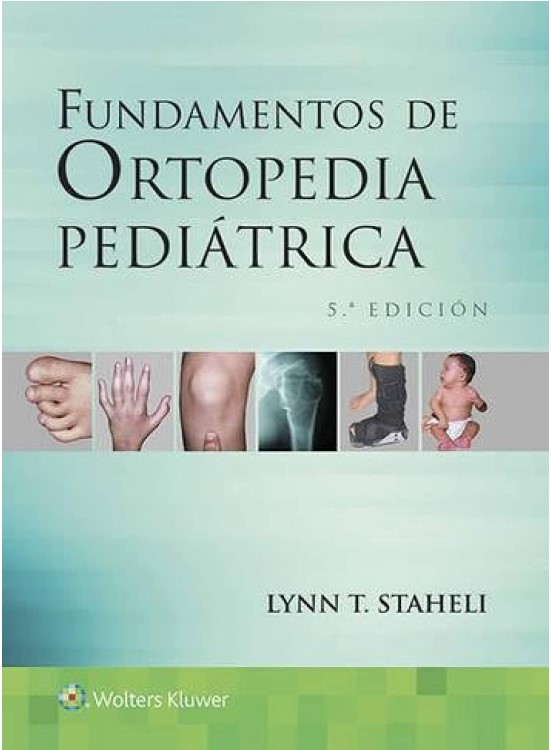
A top favorite of mine. A great manual that isn’t an overwhelming, unreadable tome. Practical yet extensive in terms of the number of conditions covered. It doesn’t go into great depth on any one topic, but it provides a good overview of each.
It is divided into sections such as normal and abnormal growth, evaluation, intervention (mainly orthotics), trauma, sports, infections, tumors, and various body parts.
What I like most is that it’s a great reference book and helps you think critically.
You can buy it here
Handbook of Pediatric Orthopedics de Paul Sponseller. 3ª Ed. Precio: 70 €. Ed. Thieme.2020.
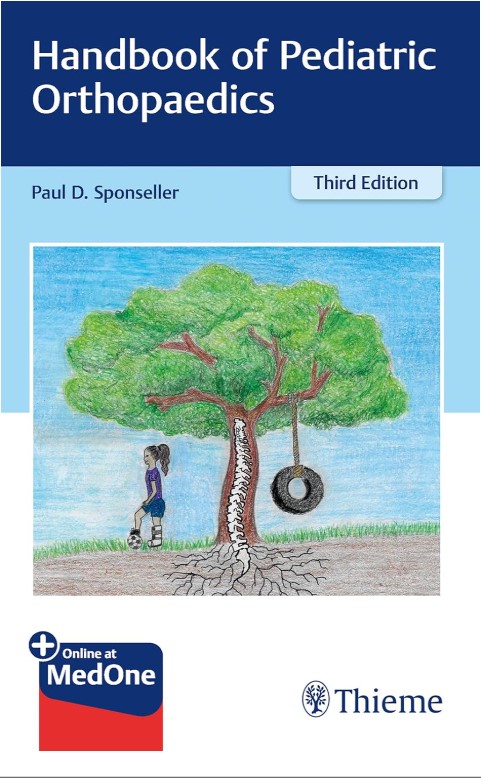
A very different type of manual. Simpler and easier to read. Its sections cover fewer variables, but they can be more practical.
It is divided into sections such as normal anatomy and development, limb growth and development disorders, spinal disorders, skeletal and systemic syndromes, neuromuscular disorders, pediatric trauma, normal values, and common orthopedic procedures.
What I like most is its simplicity, though it may fall short on some topics.
You can buy it here
Terapia manual en las alteraciones neuromusculoesqueléticas del bebé y el niño, de Iñaki Pastor (coordinador de la obra), un servidor. Precio: 42,75 €. Elsevier, 2023.
The only book specifically for physiotherapists and osteopaths. Probably the best-selling book in this field over the past year. Practical and highly focused on clinical reasoning. It helps clinicians make sound decisions with greater confidence.
It is divided into sections such as the fundamentals of manual therapy in pediatrics, evaluation and intervention, cervical spine disorders, spinal and thoracic conditions, lower limb disorders, upper limb disorders, and cranial and facial conditions.
What I like most is that it thoroughly describes both the structural and functional development of each body part—not just the structural aspects. Additionally, the diagrams and tables make it easier to make decisions that genuinely help the child and their family. And while we’re at it… the recommendations for exercises and therapies are also excellent.
You can buy it here
Comments are closed.