Terapia Manual Pediátrica Integrativa (TMPI) Terapia Manual Pediátrica Integrativa (TMPI)
  • The PIMT Concept
  • PIMT Training
    • Essential PIMT Training
    • Specialized PIMT Training
    • Online PIMT Training
  • Team
  • PIMT Professionals
  • Blog
  • Contact us
  • PIMT CLUB
    • Plans
    • Private area PIMT CLUB
  • English
    • Spanish
Terapia Manual Pediátrica Integrativa (TMPI) Terapia Manual Pediátrica Integrativa (TMPI)
  • The PIMT Concept
  • PIMT Training
    • Essential PIMT Training
    • Specialized PIMT Training
    • Online PIMT Training
  • Team
  • PIMT Professionals
  • Blog
  • Contact us
  • PIMT CLUB
    • Plans
    • Private area PIMT CLUB
  • English
    • Spanish
Apr 08

Internal Rotation Gait in Childhood: When Is It Expected?

  • 08/04/2026
  • equipo tmpi
  • Uncategorized

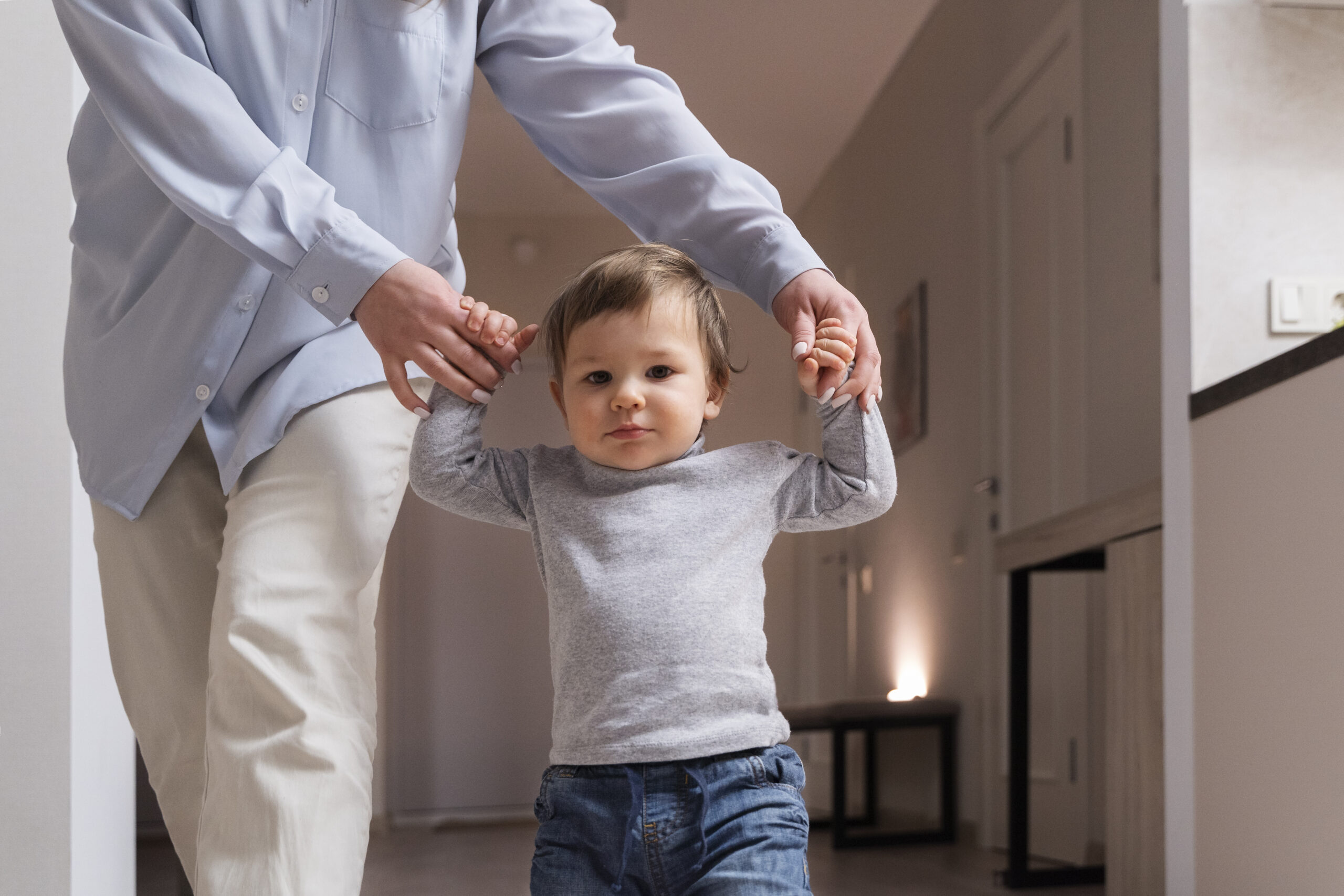
Children’s gait is an evolving process that reflects the maturation of the neuromotor system. Among the most frequent concerns in clinical consultations, internal rotation of the feet — commonly described as “turning the feet inward while walking” — often causes concern for families.

From a developmental perspective, in most cases this is an expected and transient variation, forming part of the child’s process of postural and motor organization.

Origin of Internal Rotation

The presence of this pattern may be linked to different factors, including:

◾️ Intrauterine constraints, which influence the initial alignment of the lower limbs.

◾️ Physiological bony rotations, especially at the femoral or tibial level, typical of the early years.

◾️ The neuromotor maturation process, in which postural control, balance, and coordination are still being integrated.

It is important to understand that these elements do not act in isolation, but rather form part of an overall organization of movement.

Expected Evolution

Internal rotation of the feet is most frequently observed between 2 and 5 years of age. During this period, it is common for the pattern to progressively change without the need for intervention, in parallel with the child’s growth and maturation.

Warning Signs

Although in many cases this is a benign condition, professional evaluation should be considered when the following are observed:

◾️ Asymmetries in gait.
◾️ Frequent falls or significant clumsiness.
◾️ Presence of pain.
◾️ Persistence of the pattern beyond the expected age.

These indicators require a more specific analysis within the context of overall development.

The PIMT Approach

From the PIMT perspective, gait observation is not carried out in isolation. It is integrated into a broader assessment that considers:

◾️ Postural organization.
◾️ Quality of movement.
◾️ Muscle tone.
◾️ Interaction with the environment.

This approach makes it possible to differentiate between developmental variations and possible difficulties in development, thereby guiding whether intervention is needed or not.

Supporting development means understanding its timing, avoiding unnecessary interventions, and fostering an environment that promotes the child’s motor organization.

Related video

To explore this topic further, you can watch the following video.

  • Facebook
  • Twitter
  • LinkedIn
  • E-Mail

Comments are closed.

E-Mail: info@tmpi-pimt.com
  • Essential PIMT Training
  • Specialized PIMT Training
  • Online PIMT Training
  • Personal Area PIMT CLUB
  • Legal Notice and Data Protection Policy
  • Cookies Policy
  • Headshape App
© Copyright 2026 Terapia Manual Pediátrica Integrativa (TMPI)
Utilizamos cookies propias y de terceros para optimizar tu navegación, adaptarnos a tus preferencias y realizar labores analíticas. Si continuas navegando consideramos que aceptas nuestra Política de Cookies.
Privacy & Cookies Policy

Privacy Overview

This website uses cookies to improve your experience while you navigate through the website. Out of these, the cookies that are categorized as necessary are stored on your browser as they are essential for the working of basic functionalities of the website. We also use third-party cookies that help us analyze and understand how you use this website. These cookies will be stored in your browser only with your consent. You also have the option to opt-out of these cookies. But opting out of some of these cookies may affect your browsing experience.
Necessary
Always Enabled
Necessary cookies are absolutely essential for the website to function properly. This category only includes cookies that ensures basic functionalities and security features of the website. These cookies do not store any personal information.
Non-necessary
Any cookies that may not be particularly necessary for the website to function and is used specifically to collect user personal data via analytics, ads, other embedded contents are termed as non-necessary cookies. It is mandatory to procure user consent prior to running these cookies on your website.
SAVE & ACCEPT