


👁️ Headache and oculomotor function: the forgotten link in clinical assessment
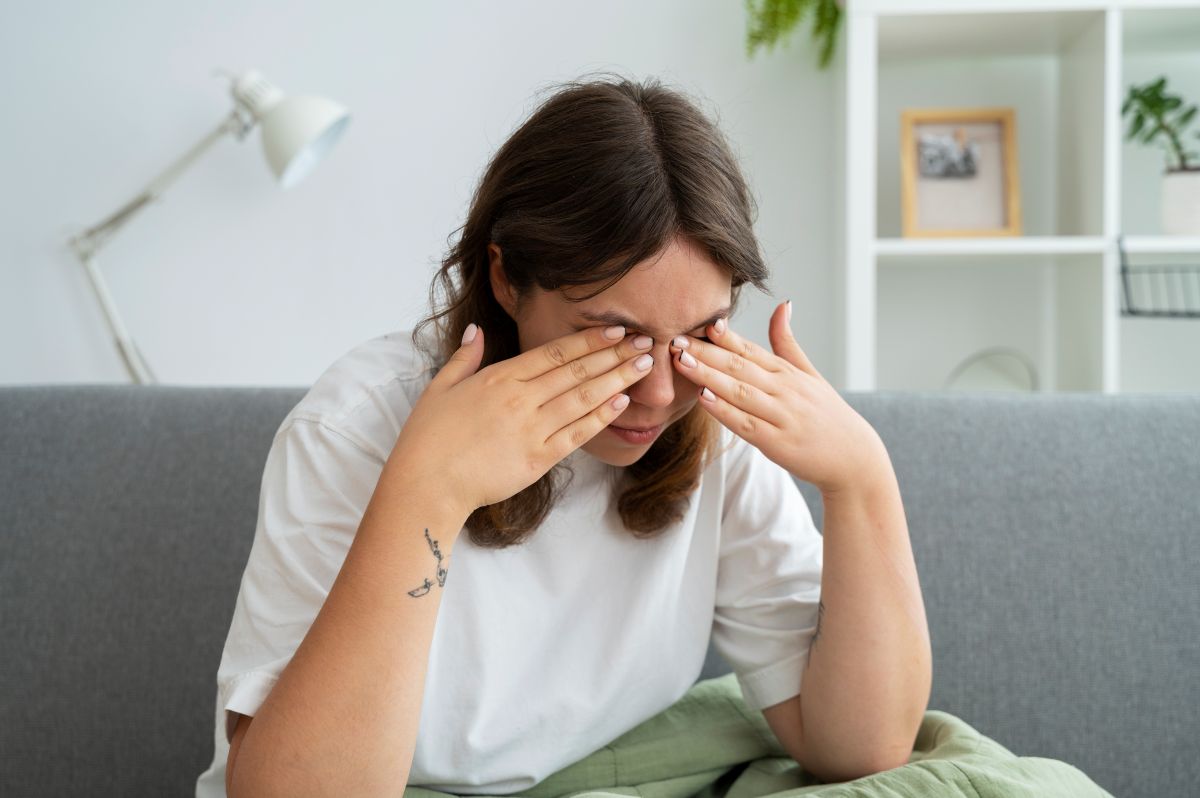
Headaches are a common complaint—not only in adults, but also in teenagers and even older children. Although they’re often addressed from a cervical, tension-related, or postural perspective, eye coordination and oculomotor system function remain largely unexplored… and are often key in sustaining pain.
Whether you work in pediatrics or with adults, the oculomotor system should be a fundamental part of both neuromusculoskeletal and neurosensory-motor assessments. That’s why it’s an integral part of clinical reasoning and evaluation in the PIMT Essential training.
What’s the connection between the eyes and headaches?
Many headaches are directly related to the eyes. And diagnostic labels don’t rule out the eyes as a contributing factor. Migraines and tension-type headaches can easily be linked to the visual system—through either oculomotor or visual mechanisms.
The oculomotor system not only coordinates eye movement—it’s also integrated with postural networks, the vestibular system, and the autonomic nervous system.Oculomotor dysfunction—such as altered vergence, poor fixation, or slow saccades—can increase visual effort, lead to fatigue, or trigger postural compensations that make the pain chronic.
Subtle issues in the visual system can also interfere with sensory and postural integration—especially in developing children and school-aged adolescents, where visual and cognitive demands are high.
🔍 Clinical reasoning: guiding questions
These questions can help you decide whether it’s worth assessing the oculomotor system in a patient with headaches:
- Does the patient report headaches after reading, screen use, or time in class?
- Does the pain improve with eyes closed or visual rest?
- Are there compensatory postures while reading (head tilt, very close to the page, closing one eye)?
- Do they report dizziness, instability, or a feeling of visual “disconnect”?
- Is there a history of head trauma, cervical injury, or facial contusions?
- Do headaches occur in sensory-stress contexts (bright lights, noise, complex visual input)?
- Are headaches accompanied by cervical/postural discomfort when looking at screens or in the classroom?
- Are there difficulties with visual attention or tracking during school tasks?
🧪 Oculomotor screening tests for patients with headaches
These tests can be easily adapted for clinical use at different ages:
For older children, adolescents, and adults:
- Smooth Pursuits: Ask the patient to follow a pen or finger in slow, horizontal, vertical, and diagonal motions. Look for jerky eye movements, gaze shifts, or compensatory head movements.
- Saccades: Ask them to rapidly look between two points (without moving the head). Assess accuracy and look for corrective movements.
- Near Point of Convergence (NPC): Slowly bring an object toward the nose. Note the distance where one eye drifts or double vision appears.
- Head-eye dissociation test: Ask the patient to move their head while keeping visual fixation on a still point. Assess visual stability.
🎯 What to do if you detect oculomotor dysfunction?
If signs of dysfunction appear, treatment options may include:
- Performing a complete manual eye evaluation to detect deviations, classify their type, and apply direct manual therapy on the eyes. This often leads to the most surprising results. You can find out more about it here .
- Cranio-cervical and orbito-facial manual therapy. Warning: cervical treatment without addressing the eyes may worsen headache symptoms.
- Integrating the visual system with visual stabilization or hand-eye coordination exercises.
- Referral to functional or neuro-optometry in the presence of major or persistent signs.
💡 Final reflection
Many patients live with chronic headaches without finding answers—and the cause may be right in front of their eyes. Incorporating the visual system into your evaluation opens up a powerful path toward global pain management. Manual therapy targeting the oculomotor system, combined with neurofunctional treatment, plays a key role in interdisciplinary work with these systems.
Comments are closed.